From Navvyman by Dick Sullivan via www.victorianweb.org
What do you think about when you hear the name Primrose Hill? Good pubs, celebrity-residents, the view over London? For me it’s a neighbourhood that looks as it does because of the building of the Regent’s Canal and the railways.
When the canal was being extended into the area, developers foresaw no obstacle to their plans for elegant houses like those along Regent’s Park: the digging was to be by hand, and the heaps of soil produced might be useful. But then they saw what building the railway did to nearby Camden Town – what Dickens in Dombey and Son called mud and ashes, frowzy fields, dunghills, dustheaps and ditches. When the soot thrown up turned to grime on the eastern edge of the new neighbourhood, all bets were off: Developers switched to building terraced houses.
Who did all the digging and throwing, who sweated and toiled to make the great engineering feats reality? They were called many names – Excavators, Cutters, Diggers, Bankers, Navigators – before Navvies was printed in a news item of 1830 and the name stuck. These itinerant workers became almost mythic figures, considered mysterious and fearsome because of how they lived: not in settled families, camping wherever the work decreed, swanning into streets and pubs in eye-catching dress.
To focus on folks like the navvies is why I became a guide: to tell histories of those often treated like props in the background on the stage of Big Events. This tradition is called History from Below, and it makes a great way to see with new eyes neighbourhoods you think you already know.
There are challenges, because whoever was recording events at the time almost always overlooked the labourers, whether they were scullery maids or navvies. But there are ways to find out, and tracking them down is my delight.
My moniker the Naked Anthropologist dates from decades when I was a researcher and activist with undocumented women. The anthropological stance of observing people as part of their own culture with its own logic allowed me to do the work. Naked Anthropology means Plain Speaking on subjects often ignored or swept under the rug; History from Below tries to do the same thing.
Jesus Being Raised From the Dead by Hans Feibusch, Church of St Alban the Martyr, Holborn
Consider Holborn, that shrine of eminent legal institutions and insurance titans. Less grand histories lurk beneath that surface. One of them, the migration of Italians, is well recognised, but for anyone interested in migration the area is a prime example of how migrating peoples move in, live side-by-side and mix with other ethnic or national groups and then move on again.
The history of streets from the Fleet Ditch to Grays Inn Road and from High Holborn to north of the Clerkenwell Road can be told through migrations of people looking for ways to make new lives, using their skills when possible or taking whatever jobs were going. Poor Irish, freed slaves, Jewish diamond-cutters and migrants from the rest of England all lived in this area when it held no appeal for wealthy Londoners. Some migrants didn’t want to come and others did: All have left their marks.
All our lives society has been represented to us as a hierarchy or pyramid in which the rich are located at the top, the middle class sits underneath and workers sprawl at the bottom. Anything lower than the bottom is called underclass, a lot of dysfunctional nobodies. Isn’t it still assumed everyone is striving to move up this ladder? Failure is constructed as happening downwards, a falling into an abyss – the word Jack London and Mary Higgs used to describe how the poor were forced to live.
For my history-walk about the poor in St Giles I did research on social reformers’ fear of cellars. How can that be? you’ll say, why, the best people now live in garden flats. From the 18th century for a long time cellar-living was considered to be appalling by those living well above ground. Cellar-dwellers were conceived of as more animal than human, an indistinguishable mass likened to moles and worms. Rescuers and reformers sought to raise up the miserable from their low position, Fallen Women first. In Gustave Doré’s drawing of the market in Dudley Street, the cellars are surrounded by old shoes and boots. Some see misery here; others don’t. Doré clearly felt sympathy with the cellar-dwellers.
What if instead of a hierarchy low-to-high we think of sides of the story: that the version we hear of current events and history is the Front Side, the official version told from the point of view of those who have the greatest communications-power. Their view places themselves at the centre, where stated aims and values are not questioned. The facade of the palace.
But for every such frontside, there are backsides, other realities, and that’s where the goings and comings of most people take place. Out of the limelight and usually out of historical accounts, too.
That’s the meaning in the title of my tour The Backside of Knightsbridge Barracks. The front of the barracks-complex faces Hyde Park; horse guards in military regalia on their way to perform ceremonial duties exit under an elaborate late-19th-century pediment. A classic Frontside.
The back of the buildings face onto where for several hundred years poorly-paid soldiers, their girlfriends, wives, children and hangers-on scraped together livings. Knightsbridge (the street) was scene of goings-on that wealthy folks called disorderly, meaning drunkenness, carousing, noise, fights, streetwalking, numerous pubs and two major music halls whose raucous style of entertainment suited the working class. Sites of Low Pleasures, according to those set on raising the tone of the area.
The walk looks at the houses where servants and tradespeople lived in what were built as mean and cheap little houses but are today the height of fashion. I talk about stable lads and grooms, dressmakers and laundresses, all the trades needed to service the rich. Two well-known courtesans appear, both with good manners and nice clothes but always trying to persuade their admirers to grant them annuities to live on and houses to live in. They don’t seem to be working-class, but they were certainly working. And there’s the story of a lowly horse guard and his dollymop-turned-wife, struggling to make ends meet. One Frontside superstar does appear, the Duke of Wellington, because he got in a fracas with one of the courtesans. Oh and his superstar horse Copenhagen appears when we’re walking in Rotten Row in the park. It’s a horsey walk.
The best thing about this award is the fact that someone like myself can qualify at all. The Women’s History Network, recognising those doing rigorous research without being employed academics, have a separate grant category for us. I shared this prize with three other women.
My proposal was to expand the research I did about working women in medieval Southwark to the same group in Norwich. While I was reading in the British Library, on and off for a couple of years, references often led me to Norwich’s development as a medieval urban centre, so of course I’ve wanted to research there. My questions would be the same I asked about Southwark: How did poorer women get by? What work did they do? Having comparable information from East Anglia will give shape and balance to the Southwark data about women I like to call the Medieval Female Proletariat.
One example from the Norfolk Record Office illustrates what I’d be looking for:
Norwich:File BL/CS 3/67
Proclamation by corporation of King’s Lynn ordering young unmarried women between 12 and 40, who have no visible means of living, to go out to service or be sent to the house of correction.
Singlewomen – the civil status assigned to women who’d never married – were considered loose cannon, prostitutes in the making, obvious troublemakers. Singlewomen couldn’t by definition be heads of households; they were told to become a servant in someone else’s household if they couldn’t manage to get married. As a wife, they would be ‘protected’ by husbands, which is another way to say they’d be kept in line.
This example also signals the connection between this project and my decades of previous research into migration: Women leave home to find new places to try to live without authority figures trying to crush them into being housemaids, unwilling wives or prisoners.
What did I promise to do with the results of this research? Why create a walk about it in Norwich of course. And include it in the Southwark walk and probably some other new walk I haven’t invented yet. It’s encouraging the Women’s History Network recognise walks as a good product of research.
So sometime this winter when prices are lower and the weather absolute crap, I’ll go to Norwich for some days and visit the cathedral to see in person this sculpture of a medieval laundress in the act of being robbed by a barefoot boy. She’s a roof boss in the cloister, one of very few representations of medieval women to be seen in a public English place.
And if there’s any way to stretch the money I’ll go to Portsmouth, too.
If you’re not an insider in ticket-buying circles, how to do it may not be obvious. Eventbrite is the name of an easy-to-use service that takes care of the financial transaction. If you search the Eventbrite website for topics you’ll be shown relevant walks. If you were to search for medieval women, for example, my walk Scratching out a living comes right up (and has little competition, which is kind of my point).
You can see what walks I have coming up via the tab on the top menu called Walks Calendar. The screenshot to the right isn’t clickable, but from this calendar the links take you to the same Eventbrite ticket-buying site. There are presently 5 walks listed; I’ll keep adding more – there’s no topic of London history that historians haven’t left women out of! I’ll be describing my thinking for each walk here on the blog, as I did for Scratching out a living: the Medieval Female Proletariat.
And there’s always following me on Eventbrite to receive alerts to new walks. (I know I’m being repetitive but I’m trying to get a new business off the ground so bear with me please.)
Why do most historical accounts fail to mention women? And not only women but just about every ordinary non-famous non-rich person that ever was, even in accounts of poverty and want? Why do historians make men 100% of the protagonists in all events? Remember the example of the 11th-century Bayeux Tapestry: 70 metres long depicting 626 human figures, 190 horses, 35 dogs and 3 women. Does anyone believe women weren’t there, in any of the scenes, on either side of the Channel, doing anything significant for a long period culminating in the Battle of Hastings? The idea is ridiculous. But as the pictures accompanying this post show, men are usually the only ones portrayed.
This post launches my new business, which I had first thought of calling the Little Shop of Women’s Walks. Twenty years ago I think that name would have been fine, but nowadays the word – the very category – women is fraught with conflict. As far as I’m concerned, anyone who identifies as a woman can be one; I’m not making a category with boundaries. And I’m not only interested in females of the species. I could say women and other marginalised people, but do I have to? My interest is to uncover and create histories of those usually left out of historical accounts, and that often means everyone who isn’t an educated man. Oh sure, a few heroic or social-reforming women and people of colour get talked about, but in many cases it’s because they were literate and could nearly pass as middle-class.
When considering telling a history, whose point of view do you take? In most histories the author presumes to have an objective meta-overview of events and to know what’s important and what’s trivial. In these accounts women are usually subordinates or walk-on characters and the poor and working-class hardly appear unless they are the objects of bourgeois charity. When Antonio Gramsci referred to the subaltern and Southeast Asian scholars built a field of studies on it, they put at the centre people rarely given their due in histories.
So: far from being original I’m building on everyone who’s griped about the omissions for a long time. It’s what I did in the research for Sex at the Margins, when I asked why a lot of feminist and middle-class activists and commentators were so upset about ‘prostitution’ when so many people prefer selling sex to their other options for making money. For so many women primarily but also for so many queers, gays, neurodivergent, disabled and a list of other identities and physical traits. Now I want to take this view to the streets, on guided walks anyone can sign up for, in versions of history where the Usual Suspects aren’t the main characters.
Of course some tours do take women as their subjects, most often middle-class reformers or philanthropists, nurses and doctors, creative artists and authors. The mistresses of important men are mentioned, as well as queens and aristocrats. All I want to do is focus on everyone not in those groups!
To sum up, I’m describing my business as London Walks with Gender, Sex and Class. Social class is even probably the most obvious thing I want to focus on: lives of working folks, hoi polloi, proletarians. The assumption that everyone wants to become Middle Class or higher permeates culture, its being understood that achieving that status requires not only having more money but also embracing the values and etiquette.
I’m closing in on 78 years old, which nowadays doesn’t even mean much, in the sense one is not necessarily ill or lame. I’ve liked computers from the beginning and don’t mind learning new routines and mastering the details, but I don’t want to spend all my time in front of screens. A lot of that is required to plan and research a walking tour, but afterwards I get to spend time in the streets, in all weathers, with live people: talking about things that matter to me, answering questions and objection,s and if I can manage it ending in a pub.
I’ve put four walks up for sale inmy Eventbrite account. The first I described in Scratching Out A Living, about 14th-century working women in Southwark, and two more treat the very poor in 18th-century Seven Dials and working people ranged around the Knightsbridge Barracks in the 19th century. Then there’s a walk in Primrose Hill that rather than focusing on famous ‘celebrities’ that have lived there looks at how the area came to be because of the coming of the railway, whose workers lived there first. I’ll be repeating these walks on future dates, so if something looks interesting but the date doesn’t work, there will be other chances.
follow me on Eventbrite to receive alerts about new dates for walks.
I’ve officially qualified, having done a very long course with Camden Tour Guides Association (Camden is a central London borough), so I’m covered by public liability insurance to guide anywhere in the UK, and am also guiding in Essex with Rob Smith.
I’ve also begun to offer private tours on a platform called ToursByLocals. There you can get a walking tour for just you and a friend designed for you by me. So if you like the sound of one of the walks you see but want to change it, you can ask by pressing the message-button. These custom-created tours often involve doing original research, and if you want to know the quality of my research look at the Publications tag on the top menu on this page: many of the items there could only have been written by doing careful research, and I don’t mean googling a topic and looking at random webpages. Reading books can be a long slog, but it’s how you do historical research, preferably in primary sources, to avoid perpetuating myths found in erroneous accounts of events. You read to understand the broader context for the specific event that interests you.
Or you can write to me on the contact form on the right-hand side of this page and ask for what you want, custom-made for you, outside the ToursByLocals platform. If you’ve researched someone non-famous who lived in London or nearby (perhaps during Ancestry searches) and would like to be shown the area, I’ll do the research to create a tour about that person in the relevant epoch in that place. There only needs to be a tube or rail station fairly near the destination, or a bus or even a taxi that can be called for a last remote stretch. I’m not a driver-guide or a black cabbie: my walks are about the joy of walking.
Follow this blog: Encourage me if nothing else. It’s no longer easy to distribute via social media without paying, and I’m not convinced, if I were to pay, that the famous algorithms would send the post to a rather subtle target-audience. The place to enter your email address is at the top of the right-hand column on this page.
You get my point about the pictures: They all came up quickly in a simple random search of the word history on a site offering images in the public domain.
My title is a paraphrase of Margaret Thatcher’s dissing of Hackney, but prejudice against Essex is knee-jerk amongst loads of middle class folks who didn’t like her. Much of the prejudice is about culture and social class – Essex is said to be full of cockneys, wide boys, girls with silicone breasts and botoxed lips, Brexiteers – but the prejudice also applies to the landscape, even the coastal edges along the North Sea. A few Essex destinations are popular to visit, such as Southend-on-Sea, with its long pier; otherwise it’s Suffolk people visit, making a point of skipping over Essex.
I on the other hand love areas of Essex that are said to be bleak, homely and full of mud. And unpopularity means that when one goes there the coast is clear. There are not only no crowds but sometimes no others on the paths at all. Friend Rob Smith shares this enthusiasm, and we’ve begun to lead walks in the Essex estuaries, the first of which I wrote about in the Witches of Manningtree. The picture above from that walk shows how an estuary-river looks when the tide is running out – flat and muddy. The River Roach at Rochford, Essex, is much less picturesque, to my mind brilliantly so, and we are doing a walk there in late October.
Part of the walk leaves the town and winds through an abandoned industrial area (a mill) that’s located on a saltmarsh. When we were standing on this bridge recently I showed Rob a sketch of birds who like salty wet muddy scrubby land, and he said Oh we’re not really on the saltmarsh yet, and then a pink-footed goose flew in to support me.
River Roach at Stambridge, Terryjoyce CC licence
So that is the saltmarsh, but when you make the detour round the site of the mill and come out onto the river, the perspective is quite different. When there’s been no rain it can look like this, or it can look green and verdant. The Roach empties into the River Crouch, after passing the final resting place of Darwin’s ship the Beagle in Paglesham. We don’t get that far.
The walk is 5 miles in order to take in Rochford Hall, home to dastard Richard Rich in Tudor times, as well as a town-centre with houses you will recognise if you know ‘New England’, the variably green and brown route to the river and then the estuary-river, where houses are distant and few. We come back to town through a good field.
But what’s there for me to talk about?The New England connection is key. Margery Allingham called Essex the nursery of Non-conformism. John Winthrop, a Puritan founder of the Massachusetts Bay Colony, lived just outside Rochford.There is a plaque to a local martyr of Bloody Mary’s rampage against all Protestants. The plainness of the Congregationalist church recalls its Puritan roots: separatists who tried making a colony in the Netherlands and later voyaged on the Mayflower to found the Plymouth Colony. The Civil War was in great part an argument about how the state church of England should be; some were fed up enough to leave the country altogether, but many others stayed and formed new sects, almost always with the idea of making church a more democratic (less-, or even anti- hierarchical) institution. Wesleyans (Methodists) were important in Rochford, and out of them grew a sect called the Peculiar People. Meanwhile the Church of England remained in the old churches, and Rochford has a pretty one at St Andrew’s.
Nowadays we refer to Protestant denominations without thinking what they meant when founded – not only theologically but in terms of society’s dividing itself up into groups with different customs. Now this impulse to cavil and divide goes on in arguments about ‘politics’, but that’s also what religious dissenting was about. I want to talk about their ideas about women, since Non-conformism – especially Puritanism of course – has a lot to answer for in the present, not only for women but for anyone outside the patriarchal mould.
Do consider coming on the walk on 28 October. Rochford is about 50 minutes east of London on a train journey with views of fields and villages. Wear shoes with good soles, as the pathways could be muddy (though Essex is England’s driest county). We’ll have a half-hour break at a pub when we leave town for the marshes.
Thanks to the Rochford Town Team for creating a website with themed walks, good photos and especially for videos giving town history snippets in current residents’ own voices. Also thanks to authors of books about Essex that resist the stereotyping referred to earlier: Strange Magic, a novel by Syd Moore, and Low Country, by Tom Bolton, spring immediately to mind.
PS: The Manningtree witch-craze walk is on again in November, when I hope the landscape will be suitably bleak.
As part of the Totally Thames Festival to be held in September 2023 I’m offering a walk I created, Scratching out a living by the river: The Medieval female proletariat, on the 10th and the 20th. This guided walk reflects years of work searching for histories of women who weren’t nobles or royals or kings’ mistresses in the Middle Ages. I’m interested in the medieval female proletariat, as was obvious in my previous walk on the Witches of Manningtree.
In the near-total absence of mention of ordinary (non-wealthy) women in all kinds of histories, and after reading long and hard about everything else about the period, I created six characters who were in search of an author: Me. You’ll meet them on this tour: scullery maid, alewife, washerwoman, brothel worker, huckster, vitteller. A huckster was a woman selling goods in the street, and a vitteller (victualler) was a foodmonger, selling in various settings (think of the word ‘vittels’ in old Western movies). Since few poor women could subsist on the takings from only one job, others besides the brothel-worker sold sex in the streets or in unlicensed bawdy houses. The map at the top, Norden’s from 1593, captures well the area of the river near London Bridge.
The British Library, Add. 42130 f.163v Detail from the Luttrell Psalter, 1325-35, showing women milking sheep and carrying things on their heads.
During several long lockdowns in London, the British Library instated a booking system and procedures for using the Reading Rooms that made working there sometimes infuriating – but also somehow more satisfying than usual. At a certain point I knew there’d be no mentions of individual poorer women anywhere I looked and decided to examine illuminated manuscripts. For a brief period scribes and illustrators (most not monks), mostly in East Anglia, decorated the margins of English manuscripts of religious texts with drawings of people: sometimes peasants, often hybrid monsters and sometimes recognisable women. Working in the Manuscript Room was a revelation, and I did learn how women were looked at – mostly in ways we call misogynistic. Women were considered lustful, untrustworthy and inferior, the sources of men’s problems. Hey ho, I’m an anthropologist and can cope.
The question was How do we know what women were doing if no man recorded it? Before the coming of the printing-press, scribes kept track of certain kinds of accounts and activities, and some monks wrote diaries. But no one described in words what poor women were doing: They belonged to the lowest order of society, close to beasts, and their activities were clearly not thought worth describing: someone had to scrub the floors and empty the chamberpots, that’s all.
Gender-discrimination is key. Take the 11th-century Bayeux Tapestry, which is 70 metres long, depicting 626 human figures, 190 horses, 35 dogs and 3 women. Three in a long story taking place in multiple houses, castles, ships and towns in the build-up to the Battle of Hastings. Does anyone think women weren’t there, leaving battles out of it for the moment? One of the three was a queen, one is considered a mysterious figure and the third is a sort of Everywoman, seen fleeing from the burning of her village (holding a child’s hand, above). The number increases to four if you include a naked female in a sex-scene in the margin. Women were disappeared from history simply by not including pictures of them.
The British Library, Women spinning and carding wool, Detail from the Luttrell Psalter, 1325-35, Add. 42130.
Another kind of disappearance can be seen in guilds like the Worshipful Company of Clothworkers, who formed in the 16th century by amalgamating earlier companies of weavers, fullers and shearmen. But when the clothworkers defined themselves they began at a point in the production of cloth after all tasks conventionally allotted to women were finished: carding, combing and spinning the wool that were necessary before weaving and producing something called cloth. Entrepreneurial men called clothiers organised the distribution and collection of wool carded, combed and spun in women’s homes, and then when guilds were forming they simply left out all that processing. Spinning on the Great Wheel takes great skill, so it couldn’t be claimed that those early processes were somehow too easy to include. One woman historian charmed me by concluding, after long study of spinning all over the British Isles, that men weren’t able to do it.
And of course disappearance of women was also juridical, as when women married and ceased to appear in records. Many women ran businesses of their own in the City of London around Cheapside, a centre of London shopping: we know this because of the trade cards they had printed to advertise, such as this one for Esther Burney. But if they married their names disappeared from the record, their businesses now legally belonging to their husbands. The women were most probably still running them but they suffered a civil death (known as coverture).
The question is what you think history is: The formal activities of royalty and nobility, a tiny proportion of the whole population? The activities of men, particularly the wealthy? Anything related to national government policy and the politicians who made it? For me such histories are simply inadequate.
The particular project reflected in my Southwark walk concerned the river. Some years ago I did a training run by the Thames Discovery Programme to join the Foreshore Recording and Observation Group (FROG – the foreshore being the area along the Thames covered and uncovered by twice-a-day tides). At one point a document was written giving a history of human activities alongside and on the river. There was no single mention of women or female activities anywhere, and I decided That’s it, I’m doing something about this. So I set out to research and as described above found almost nothing there.
So: How do we know what women were and weren’t doing on the river if they are never mentioned in histories? We can’t conclude they stayed at home taking care of children all the time if they were poor. We can’t even conclude they had a home, though obviously they ate and slept somewhere. We can’t know they didn’t participate in the many occupations recorded for men, because there’s no evidence of their being forbidden. Occupation-names often included -man, but that doesn’t mean the person involved was male.
If what is called data is required, then the first that informs us about poorer women’s work in London may be the Poll Tax Return of 1381 for Southwark, now a borough of the city lying at the southern end of London Bridge. For centuries Southwark’s population lived mainly along the riverside, so this area is a good place to begin to create history about what women were doing. The occupations of my characters were all common and known, though most of them probably didn’t pay well enough income to make them liable for paying poll tax.
Photo looking down at the Stew Lane foreshore by Uy Hoang, from Google streetview
All the women relied on water-sources (the river, tidal marshes and springs) to do their work. I have tried to bring them to life in talks I’ve given, and now on a walk where we can stand where they would have stood. Tiny remnants of the 14th century do remain if you use your imagination, like with this image by Uy Hoang from Google streetview that shows the foreshore at the end of Stew Lane on the north bank of the river. This is where the guided walk ends, where wherries picked up clients bound for the brothels and rowed them to the south bank. Whether you call them sex workers, prostitutes or whores, they belonged to the medieval female proletariat.
To follow the story of how I am researching women-and-other-oddballs’ histories to make guided walks, please subscribe to this blog at the top of the right-hand column.
PUBLIC NOTICE: I’ve become a qualified tour guide. Not because I want to take tourists to see the changing of the guard or other typical tourist delights but because I’ve been an inveterate walker all my life and I like talking about pieces of the past other folks might not know about – while walking. You can see me doing it in this photo from my first paid walk, and you can read more about it on the page called London Walks. My fists are out because I was demonstrating a method for ‘swimming’ women accused of witchcraft.
This walk was led along with Rob Smith, a longtime guide and friend. In the past year we have become enamoured with estuaries in the county of Essex – sprawling tidal rivers that end at the North Sea. The landscape can be spectacularly bleak when the tide is out and all is mud.
The co-leading project started last year when we were walking in Manningtree and Mistley, two small towns on the south bank of the River Stour. Various signs portrayed a man named Matthew Hopkins, who had a brief but nasty career identifying witches in East Anglia in the 17th century. You may remember him as the villain played by Vincent Price in the 1968 horror film Witchfinder-General. Price was nearly 60 when he played the actually only 24-year-old Hopkins, but Never mind, villains who cruelly misuse innocent women are a classic trope, and good fun was had by all watching the movie.
What happened was Rob began making comments about Hopkins and witches, and I kept saying Er, not really, it was more like this or that, and suchlike. Because in my decades of studying the victimising of women I must have thought as much about witches as about prostitutes. The walk proceeded to other things, but towards the end Hopkins reappeared as one-time landlord of a pub with a misleading plaque about him on the wall. I objected, and we discussed it some more, and eventually Rob suggested we do a walk on it.
My stops, as they’re called in the trade, addressed the witch craze. But instead of centring Hopkins I focused on three women accused of witchcraft: Anne and Rebecca West of Lawford and Elizabeth Clarke of Manningtree. We know a few facts about these women because they were accused, charged and tried, and two of them were hanged.
The backdrop to this witch craze was the English Civil War, which for the Parliamentary side (Roundheads) was a moral crusade. For them the Reformation had not gone far enough; war was required to establish true religion and halt the roman catholic back-sliding of Charles I.
The two-guide walk began on a recent Saturday in the village of Lawford, whose church bears the scars of iconoclasm: sculpture with heads smashed in by Roundhead troops or locals offended by objects associated with old bad ways (click on the picture to see the smashes).
By the mid-17th century numerous Protestant groups had disassociated themselves from the established church of England; they are often grouped together as Dissenters or Non-conformists. But there was one group more passionately attached to this war than others: the Puritans. In East Anglia and Essex, Puritans were numerous and powerful. Their goal was to purify England’s religion; it was a struggle against the anti-Christ that entailed finding and rooting out those in league with the devil.
In the atmosphere of insecurity and mistrust that reigns in civil-war societies, paranoia about the neighbours easily comes to seem normal. This is the context in which a wave of witchcraft accusations swept through the Manningtree area. Witchcraft had always been considered a fact of life: that some people have the ability to damage others by wishing them evil. Demonology was a popular topic; James I had written one of his own.
Many able and intelligent men had left their villages to fight in the war. Women left behind were viewed according to marital status: Wives enjoyed the legal protection of their husbands; widows had rights. But singlewomen, the term used for the never-married, were thought to be morally weak, uncontrolled and unreliable, making them quite vulnerable to exploitation.
There is also a sexual component: Puritans wanted to suppress activities previously seen as acceptable, like theatre, dancing and sex outside marriage. They saw these behaviours as evidence of ‘witches’ sabbaths’: carousing and sex with the devil. Young women like Rebecca were easily viewed as dangerously lustful.
The witch-finding described here took place between 1644 and 1647 within a legal framework. Three acts had been passed in the previous century: in 1542, 1562 and 1604. But for the law to proceed against anyone, someone had to make an accusation against them, citing a specific harm done.
Anne and Rebecca West had a history of tiffs with their close neighbours, the Harts, and now Prudence Hart said she suffered a painful miscarriage and paralysis at the hands of Rebecca. Thomas Hart said their son had died crying Rebecca’s name, and Anne was accused of causing a boy’s death some years earlier.
In Manningtree, just to the east of Lawford, a man named John Rivet accused 80-yr-old Elizabeth Clarke of bewitching his wife. Elizabeth said she was a witch and knew other witches, but she wouldn’t name them. Remember that the word witch could connote good powers as well as bad, and a woman who knew herbs and felt spiritual, clairvoyant or intuitive did not have to be ashamed of it. Some folks were called white witches, good witches, blessers, wizards, sorcerers and cunning or wise folk. But the news of Clarke’s confession was taken to a local landowner, John Stearne, who took it to magistrates. They gave him permission to investigate Clarke. Matthew Hopkins, son of a Suffolk minister, had moved to Manningtree and volunteered to help Stearne. Both men had read the many treatises against witchcraft and believed in the evil.
In her confession Clarke implicated other women including Anne and Rebecca West. All three women were accused of entertaining demons in the shape of small animals called familiars, or imps. Cats, dogs, rabbits, frogs, ferrets, owls appear in pictures of the time. Stearne and Hopkins watched Clarke for three nights and said they saw her familiars. Under the 1604 Act Against Witchcraft, the keeping of familiars was punishable by death.
Investigations consisted largely in interrogating women to get them to confess to pacts with the devil. They were walked up and down night after night to prevent their sleeping. Respected women of the town were given the job of searching the accuseds’ bodies looking for ‘devil’s marks’ or ‘teats’ their familiars were thought to suck blood from. The marks were searched for and found between women’s legs, using a metal pricking device. The test was said to be that if women didn’t scream in pain when pricked on a teat then they must be witches. But the tool was spring-loaded so the pricker could be retracted into the handle, meaning women didn’t scream – which constituted evidence of being a witch. [This device is on display in Colchester Castle.]
A number of local women became expert searchers. Mary Phillips was a Manningtree midwife who accompanied Hopkins and Stearne when they began travelling. The focus on marks was a hallmark of English trials.
Accused women were also tested by ‘swimming’ in a pond, tied crossways (opposite thumbs to big toes) and held by a rope under their armpits so they could be dragged in and out of the water. Since it was believed the pure element of water would reject evil, floating was believed to be a sign of guilt. But the men wielding the rope would have had good control over this test, and it is this specific practice that provoked most opposition to the witch-finders. Parliament eventually forbade the use of swimming in these investigations.
Hopkins called himself Witchfinder-General and had local support, but he had no mandate from parliament. It’s useful to remember that at this period there was no institution of police, so individuals’ taking it upon themselves to catch criminals was normal. In the legal framework, however, neither he nor Stearne could decide to investigate on their own initiative: there had to be an accusation from an ordinary citizen. What the two men did is awful, but neither of them has struck me as particularly fiendish or even interesting. By offering to investigate they gained power and status and some money, but the amounts weren’t enough to make them rich.
Word of the investigations spread, and Hopkins and Stearne were invited to other towns: to so many places over a short period that it merits being called a witch craze, the term usually used about the phenomenon in European countries. Amounts are recorded in the towns of Aldeburgh and Stowmarket in Suffolk and Kings Lynn in Norfolk that were paid to the men to clear the towns of witches.
There were doubters, and in some East Anglian places opposition nipped witch-finding in the bud. For this to happen there had to be male authority-figures present who dared to scoff. A minister named John Gaule of Great Staughton in Huntingdonshire objected that parishioners were talking more about witch trials than about God and made it clear that witchfinders were not welcome. Hopkins was questioned at the Norfolk Assizes about his methods and about how was it that he was able to detect witches: was he something special? This led to his publishing a defence, The Discovery of Witches, where he answered criticisms point by point. The bible was quoted: Thou shalt not suffer a witch to live. (Exodus 22:18).
But his chief defence was that he and Stearne only went where they were invited. Even in Manningtree Hopkins and Stearne couldn’t have succeeded without support: at least 100 witnesses testified against accused women. Eventually 36 women from the Manningtree area (the Tendring Hundred) were arrested on charges of witchcraft and imprisoned in ghastly conditions in Colchester Castle. Four died of plague. Hopkins travelled there to get Rebecca West to tell him about witches’ sabbaths attended by the group: This would be proof they were in league with each other. Rebecca gave him what he wanted.
The women were taken to Chelmsford Assizes to be tried. Elizabeth Clarke and 31 others were convicted and hanged there. Four of the convicted were brought to the village green in Manningtree and hanged: Anne West was one of them. Rebecca was spared, having testified against her mother. Did Anne advise Rebecca to save herself? Did Hopkins offer her a deal?
To me the fundamental question is how could it become common and acceptable to accuse your neighbours of witchcraft knowing death was the penalty? The county of Essex accounted for 59% of witchcraft prosecutions, and another large per cent occurred nearby. During the Hopkins-Stearne trials some 250 witches were accused and at least 100 were hanged.
Hopkins’s death at age 26 in August 1647 is recorded in the Mistley parish register; Stearne said he died of consumption. He was buried in a churchyard now decrepit, and his ghost is said to haunt a nearby pond. In the face of growing opposition Stearne found he had other things to do, though he also published a treaty on witchfinding. He then retired, and the craze fizzled out.
Novels written by historians can often illuminate sketchy history, bringing unknown persons from the past to life. I can recommend A. K. Blakemore’s novel The Manningtree Witches, in which Rebecca is the principal character. After the hangings she leaves town and travels to London, surely a likely outcome after what she’d been through. Blakemore then has her getting a ship to the New World. Since the destination could well have been Massachusetts, already settled by many Essex Puritans, word of who she was would follow her, making this quite a charged proposition. She could easily have become a prostitute, though.
What I’ve recounted here took place on a walk through rolling countryside on the eastern edge of Dedham Vale (Constable country), on paths Rebecca and Anne would have trodden, then along the River Stour at high tide with a classic beach-scene in progress, and on streets where 16th- and 17th-century houses are masked by Georgian facades. Rob talked about other periods, including Richard Rigby’s failed attempt to make Mistley a spa in the 18th century. We saw Robert Adam-designed towers and late 19th-century factory buildings and pubs where Hopkins and Stearne could have met with locals to gossip. We all stopped for a drink in one that’s next to the green where Anne West was hanged: the darkest moment in the walk, but somehow more meaningful because you are actually there. We stopped at the kind of pond where ‘swimming’ would have been carried out, which you see me describing in the photo at the start.
Many dismiss the events I’ve described as being nowadays unthinkable superstitious hooey. Hangings aside, I can personally think of several similar crazes that have happened in my lifetime that punish innocent-enough individuals, which you can read about in posts on this blog going back to 2008.
Note about sources: I’ve been able to see assize-court records, as well as mass-printed news pamphlets, which is where ordinary people would have become familiar with names, accusations and hangings and seen wood-cuts depicting witches’ activities. Those were the popular media of the time. I read many scholarly works giving statistics and interpreting events in various ways. As for focusing on the accused women, I’m far from the first person to do it. In the course of my research I was given two walking brochures by Alison Rowlands at the University of Essex that centre victims, created by a number of local Essex women. One is called Walking with Witches. Alison also gave me the name of a former student, James Cundick, who made maps of Hopkins and Stearne’s travels, as well of those of William Dowsing, the Iconoclast-General in charge of smashing down popishness in churches. In the screen-capture above, taken from James’s map, you see the area I’ve been talking about. All these sources helped me put together my own ideas. Thank you James and Alison.
I took the photo in Lawford church, Rob took the other photos, and I believe the various woodcuts and early printings are in the public domain. If they’re not, please let me know.
Yes we’ll offer the walk again, and we’re getting another estuary walk ready now. Yes my own walks will be in London; I’m working on those. Subscribe to this blog and you’ll find out. Leave any questions or comments below and I’ll respond.
The New Abolitionist Model The New Abolitionist Model By Laura Agustín, was published in Jacobin Magazine 6 December 2017. I wrote this after reading...
Il y a quelques années, on m’a demandé de rédiger un texte pour une édition spéciale de la revue The Commoner qui portait sur le travail du care et les communs (coordonné par Silvia Federici et Camille Barbagallo). Contrairement à ce qui était d’usage à l’époque pour les personnes qui étudient le travail de soin et de reproduction, elles tenaient à y inclure le travail du sexe. Elles m’ont posé une série de questions, dont certaines auxquelles je n’avais pas l’habitude de répondre. Leur langage marxien d’un certain type, que je ne parle pas couramment, faisait en sorte que je devais continuellement demander des éclaircissements. Enfin, leur édition spéciale est parue en 2012, dans lequel on retrouvait le présent texte. Ce dernier a également été publié dans Jacobin au cours de la même année. Le voici donc maintenant publié pour la première fois en français. Il commence par une blague. Je me rends compte que ce n’est pas la seule fois que je publie des blagues à propos de l’idée du sexe en tant que travail.
Un colonel de l’armée s’apprête à commencer le briefing du matin pour son état-major. En attendant que le café soit prêt, le colonel révèle qu’il n’a pas beaucoup dormi la nuit précédente parce que sa femme avait été d’humeur coquine. Il lance la question à son auditoire : quelle part du sexe est «du travail» et quelle part est «du plaisir»? Un major opte pour une proportion de 75-25% en faveur du travail. Un capitaine avance 50-50%. Un lieutenant répond 25-75% en faveur du plaisir, dépendamment du nombre de verres qu’il a bu. Devant l’absence de consensus, le colonel se tourne vers le simple soldat chargé de préparer le café. Qu’est-ce qu’il en pense? Sans hésitation, le jeune soldat répond: «Mon colonel, il faut que ce soit 100% de plaisir.» Surpris, le colonel lui demande pourquoi. «Eh bien, mon colonel, s’il y avait là du travail, les officiers me demanderaient de le faire à leur place».
Peut-être est-ce parce qu’il est le plus jeune, le soldat ne considère que le plaisir que le sexe représente, alors que les hommes plus âgés savent qu’il s’y passe bien davantage. Ceux-ci ont peut-être mieux saisi le fait que le sexe est le travail qui met en marche la machine de reproduction humaine. La biologie et les écrits médicaux présentent les faits mécaniques sans aucune mention d’éventuelles expériences ni de sentiments indescriptibles (le plaisir, en d’autres termes), car on y réduit le sexe à des spermatozoïdes qui se tortillent et se frayent un chemin vers des ovules en attente. Le fossé est vaste entre les faits bruts et les sentiments et sensations impliqués.
Les officiers ont aussi probablement à l’esprit le travail qu’implique l’entretien d’un mariage, en dehors des questions du désir et de la satisfaction. Ils seraient susceptibles de dire que les relations sexuelles sont spéciales (voire sacrée) entre personnes amoureuses, mais ils savent aussi que le sexe fait partie du partenariat visant à traverser la vie ensemble et qu’il faut également le considérer de manière pragmatique. Même les gens qui s’aiment n’ont pas des besoins physiques et émotionnels identiques, ce qui fait que le sexe prend des formes et des significations plus ou moins différentes selon les occasions.
Cette petite histoire met en lumière quelques unes des façons dont le sexe peut être considéré comme un travail. De nos jours, lorsque nous parlons de travail du sexe, le focus est immédiatement mis sur les échanges commerciaux, mais dans le présent article, je vais au-delà de cela et je questionne notre capacité à distinguer clairement quand le sexe implique du travail (entre autres choses) et le travail du sexe (qui implique toutes sortes de choses). Le tollé moral entourant la prostitution et les autres formes de commerce du sexe fait généralement valoir que la différence est évidente entre le sexe bon ou vertueux et le sexe mauvais ou néfaste. Les efforts déployés pour réprimer, condamner, punir et sauver les femmes qui vendent du sexe s’appuient sur l’idée selon laquelle ces dernières occupent une place en marge de la norme et de la communauté, qu’elles peuvent être clairement identifiées et prises en charge par des gens qui savent mieux qu’elles comment elles doivent vivre. Démontrer la fausseté de cette idée discrédite ce projet néocolonial.
Aimer, avec et sans sexe
Nous vivons à une époque où les relations basées sur l’amour romantique et sexuel occupent le sommet de la hiérarchie des valeurs affectives, dans laquelle on suppose que l’amour romantique est la meilleure expérience possible et que le sexe des personnes en amour est le meilleur sexe et ce, à plus d’un titre. La passion romantique est considérée comme significative, une façon pour deux personnes de «ne faire plus qu’une», une expérience qu’on croit parfois amplifiée lors de la conception d’un enfant. D’autres traditions sexuelles s’efforcent également de transcender la banalité dans le sexe (mécanique, frictionnel), par exemple le tantra, qui distingue trois différents objectifs du sexe: la procréation, le plaisir et la libération, le dernier culminant à la perte du sens de soi dans la conscience cosmique. Dans la tradition romantique occidentale, la passion consiste à focaliser une forte émotion positive qui va au-delà du physique, en opposition à la luxure qui n’est que physique, envers une personne particulière. Continue reading →
Brothel photos from World War II France These photos document brothel activity for soldiers in German-occupied France during World War II. The Deutsches Bundesarchiv (German Federal Archive)...
When future historians try to understand what ‘trafficking’ meant in the first 20 years of the 21st century, I hope this memoir gives them pause. Recording how my questions about migration from 25 years ago coincided with the rise of a thing called trafficking as major social issue, this piece is both personal and political.*
Snake Oil
Swindle, chicanery, skullduggery, con. There’s no one perfect word to describe how trafficking came to be hailed as one of the great problems of our time. Excess in rhetoric has known no bounds, with campaigners saying theirs is the new civil-rights movement and claiming there are more people in slavery today than at any time in human history, amongst ever-intensifying hyperbole.
And there was me thinking it was about folks wanting to leave home
to see if things might be better elsewhere.
The outcry had begun in insider-circles when I stumbled onto the scene in the mid-1990s, but I didn’t know the lingo or even what ideology was. Novels were my reading, not social theory. I hadn’t ‘studied’ feminism but felt myself to be part of a women’s movement since the early 1960s. I believed I was asking reasonable questions about a puzzling social phenomenon and refused to be fobbed off with explanations that made no sense. My trajectory as a thinker happened to coincide with a piece of governmental legerdemain that switched the topic of conversation from human mobility and migration to organised crime, like peas in a shell game.
At the time I was thinking about how so many, when faced with adversity, decide to try life in new places. I was not specially disrespectful of laws, but, like most migrants, didn’t feel that crossing borders without paper permission was a criminal act. I had no preconceived notions about prostitution; the women I knew who sold sex, poor and less poor, understood what they were doing.
For a while I had a job in an AIDS-prevention project in the Caribbean and was sent to visit parts of the island known for women’s migrations to Europe, where they would work as live-in maids or prostitutes. I visited small rural houses where daughters living abroad were money-sending heroes. At a film showing migrant women being beaten up by Amsterdam police, campesina audiences scoffed: their friends and relations in the Netherlands told the opposite story. A funding proposal I worked up for improving the experiences of migrants was returned with everything crossed out except ‘psychological help for returned traumatised victims’, an element I’d never included in the first place.
At a daylong event in Santo Domingo that was organised by black bargirls who called themselves sex workers, I sat in the last row. After a series of testimonies by the women and expositions by local legal experts, a speaker appeared who was said to have flown in from Venezuela. Addressing herself to the women in the first row she said ‘You have been deceived. You are not sex workers; you are prostituted women’.
I was horrified: How could she be so rude to her hosts? Someone said she was a member of the Coalition Against Trafficking in Women, but I didn’t know what that meant. From my place at the back I couldn’t see the bargirls’ reaction, but no angry words or protest ensued, perhaps because at that somewhat formal event a certain middle-class respect held sway.
A couple of years later, working in Miami as a secretary, I got on the Internet. When I finally learned how to search properly, I connected to a forum of escorts and activists who seemed to be on my wavelength about selling sex. Advocates of rights, they spoke about their personal experiences, and while they didn’t share the migration context, their feelings about this livelihood were the same as those of migrant women.
So now I was really puzzled: Where did the disparity of ideas about prostitution come from? What was the uproar about? What about the women I knew? No one was talking about migrants. When I set out to read about them, I found nothing at the public library.
To cut the story short, I ended up in a Master’s programme in something called International Education, which led to my first visit to a university library, call-number for prostitution in hand. Books with this number stretched from the top shelf to the bottom and up and down again into the distance. Beginning at the first book I began to read, but it didn’t take long for the books to seem indistinguishable. I began to riffle though tables of contents and key chapters, looking for discussions of my common-sense questions. When I found nothing, I wondered how there could be so many books so short on actual information. No one like my friends was ever mentioned, migrant or not. Something strange was going on.
For fieldwork purposes I proposed a short ethnographic stint in Spain, where I’ve often lived, amongst migrant women selling sex. One application for funding got me onto a shortlist, but at the interview by a committee, a political science professor slapped my proposal impatiently. ‘These women’, he jeered. ‘How do they get there?’ ‘In airplanes’, I replied.
My limited but grounded experience was whole discourses away from how such academics had begun to talk. Later I was told he was acquainted with Kathleen Barry, whose books hating prostitution had figured in my reading.
This was my first experience of bias based on my having framed the subject wrong: rather than Migrant Women Selling Sex, my proposal should have been titled Trafficked Women. I know this now, but at the time I was only mystified.
@rigels, Unsplash
Soon after, I was invited to speak at an event for International Women’s Day to be held in the community centre of a small New England town. Someone had to drive me hours through heavy snow to get there, but upon arrival we were told my name had been removed from the agenda. Some influential person, probably an academic, had been outraged that I’d been invited, but I never met them, knew their name or received an apology. This was my second experience of bias against my way of thinking.
After that, I lost count.
In 1998, I was invited to join the Human Rights Caucus at meetings to draft protocols to the UN Convention against Transnational Organised Crime. My ideas were welcome to this group, but I said no, because I still believed there was a misunderstanding. I thought there must be women I hadn’t met who could be understood through this concept of trafficking, and since I wasn’t studying them I saw no reason to get involved.
But as time went on and I presented my work here and there, I realised we were all talking about the same thing: women who leave home and make a living selling sex, in a variety of circumstances. But where I was describing how they try to take control of their lives, others were denying them any part in their fate. In the process of defining women who sell sex as victims, all differences in experience were being erased. I considered the result to be the antithesis of interesting and meaningful intellectual work.
I had set out to understand the disconnect between what I saw around me, amongst my friends and increasing numbers of acquaintances who were selling sex and how they were discussed by outsiders. At the end of the Master’s degree I had inklings of what was going on but hadn’t answered my original question: Why were women who opted to sell sex such a source of discord? And the corollary: Why were so many vowing to save women from prostitution?
Rather reluctantly, I pursued these as a doctoral student in Cultural Studies in England, but I spent several years in Spain doing the field work. My research topic was not migrant women, since there was no mystery to me about what they were doing. Instead, my subject was those social actors who professed to help migrants and sex workers, in governmental, NGO and activist projects. They were my mystery. When I started in 1999, none of them were talking about trafficking, but polemic about prostitution was ubiquitous.
In 2000, the editor of a migration-oriented journal in Madrid invited me to write about migrants who sold sex, sin polémica (without polemic), because by now outraged ranting was the only tone heard in public. By this point I was observing in a consciously anthropological fashion, so her requirement suited me. The resulting article, Trabajar en la industria del sexo (Working in the sex industry), led to a high official’s infiltrating me into an event held by the Coalition Against Trafficking in Women, to spite an abolitionist rival. Although I had no intention of making my presence known, I did attend, and for one long day listened to the ravings of some of the world’s most well-known anti-prostitutionists.
I won’t forget how Janice Raymond narrowed her eyes and dropped her voice when denouncing those who disagree with her fanatical abolitionism: ‘There might even be some of them in this room’, she said.
I backed against the wall where I was standing, wondering if she knew I was there. Later they trooped into a luxurious salon for smug feasting on elegant canapés and wines, inside the hyper-bourgeois Círculo de Bellas Artes.
When the Palermo Protocols were published I saw the human-rights group had managed to limit the damage, but I was glad I had decided to stay away from meetings to draft them. While trying to understand the humanitarian impulse to ‘help’ the poor I had appreciated Cynthia Enloe’s work showing how ‘womenandchildren’ are treated as an indistinguishable mass of helpless objects. Now here these objects were, enshrined in a trafficking protocol that scarcely acknowledged women as migrants, while migrant men exercised agency in the smuggling protocol.
It was soon obvious to insiders that the situating of migration- and sexwork-issues within the ‘organised crime’ framework was a fatal event that would determine the nature of all conversation afterwards. Many who believed distinctions between smuggling and trafficking could be maintained and the trafficking concept kept within bounds soon threw up their hands. Ever more activities were said to be trafficking, causing numbers of presumed victims to skyrocket.
My counter-narrative formed part of a calm and conventional report on migrant women’s jobs in Spain carried out by a collective of Madrid sociologists glad to have someone to do the sex-work section (2001). A few years later Gakoa published my various writings so far in a book called Trabajar en la industria del sexo, y otros tópicos migratorios (2001, Working in the sex industry, and other migration topics). I was reaching an audience skeptical of the news they were being fed in mainstream media about migrant women.
Trafficking became a big-time crime issue not because of its truth but because it served governments’ purposes. The interminably warlike USA loved a reason to go after bad men of the world on the excuse of saving innocent women. European states got justification to tighten borders against unwanted migrants. The UK could pretend it was going to be the new leader of anti-slavery campaigning just as their empire comes to an end. The UN was authorized to set up numerous new programs and initiatives. A range of other governmental entities benefited; Interpol and many police services were able to expand to new areas of ill-informed expertise.
And then the NGO sector began to sign up to this infantilisation of women, just as if we were living hundreds of years ago, when East End social workers set out to raise the fallen women of London. Even Hollywood actors jumped on the bandwagon as ambassadors claiming to be ‘voices for the voiceless’. The urge to Rescue was mainstreamed.
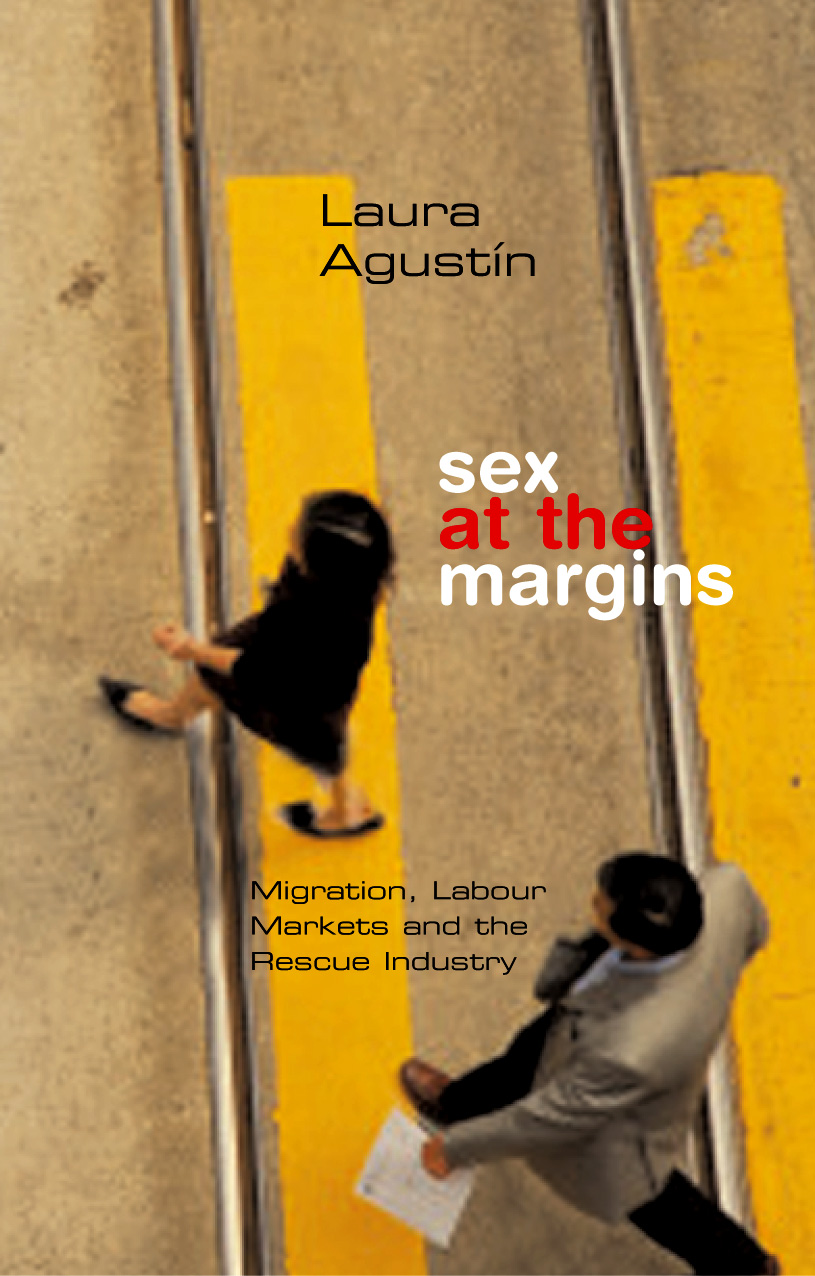
Meanwhile, I finished the PhD and put the thesis away. For several years I ignored a contract I had signed with Zed Books to publish, because I’d answered my own questions and didn’t imagine others would be interested. Eventually I changed my mind and edited the thesis to become accessible to more readers. When Sex at the Margins: Migration, Labor Markets and the Rescue Industrycame out in 2007, it spoke to a growing social controversy and, rather than die the usual quick death of even quasi-academic volumes, has continued to sell, as relevant now as it was 13 years ago – alas. This was the birth of the term Rescue Industry. Mainstream media were interested; I wrote for some established news sources.
By 2010, when the BBC World Service invited me to speak at a televised debate on trafficking at an event sponsored by Madame Mubarak in Egypt, anti-trafficking had taken over the airwaves. But 50 minutes called ‘debate’ needed drama, and so far the panel was composed of guests all singing the same Rescue tune. I demurred: Why would I subject myself to such nonsense? Everyone would hate me – No. Then they said I could bring a friend, and I gave in, ending up on a stage in the Temple of Karnak. I managed to keep a straight face at the piffle flowing forth until Siddharth Kara’s pretence of expertise made me laugh out loud, causing Hollywood actors Mira Sorvino and Ashton Kutcher to rise from their seats in the audience to deplore me and deplore the BBC for having me. The meaning of the word ‘debate’ had escaped them. Symbolic, really.
Nothing that has happened since has changed my mind about the Protocols. A complex situation was deliberately obscured by governmental actors who set up a straw man so frightening scads of educated liberal folks were bamboozled, and through heavy financing and institutionalisation of programmes the fraud continues. I do not refer here to what is called moral panic, though that helps explain how the general public got caught up in the frenzy. I’m referring to the cynical selection of a fake tragic and terrifying cause as governmental policy.
Mechanisms to frame policy based on lies are not uncommon: a similarly egregious recent case involved ‘weapons of mass destruction’ that didn’t exist. And just as hardcore war was waged based on that lie, softcore belligerence has been endlessly launched at migrants and women who sell sex, via the claim that everyone who facilitates a trip is a criminal, everyone who buys a trip is a victim and every prostitute must be rescued. Embarrassing mainstream pundits like the New York Times’ Nicholas Kristof elide all kinds of commercial sex with trafficking, in an undisguised campaign against prostitution that allows them to take imperialistic jaunts such as live-tweeting brothel raids in Cambodia (2012), shenanigans moral entrepreneurs carry out in an effort to look like heroes.
The actual earthly problems behind all this derive from poor economies and job markets that spur people to go on the move in search of new places to work. Sometimes home-conditions are direr than usual; sometimes there is gang conflict, war or natural disaster. At times societies are so unjust that those persecuted for beliefs or personal characteristics feel compelled to abandon them. In all these cases, when they illegally move into other countries, anti-foreigner sentiment, underground economies and social conflict flourish.
Which alternative policy-frameworks might have described this complexity, and which policy responses could have ensued, had honesty prevailed? In countries of origin, better distribution of wealth via economies that provide jobs with wages that can be lived on. In destination countries, an overhaul of government accounting so that more jobs are included in the formal sector, coupled with migration policy that allows more work-permits allotted for jobs not defined as ‘highly skilled’.
There are challenges here, but the ideas stick to the ground where ordinary people pay other ordinary people to help them travel, get across borders without visas and get paid jobs without holding residence or work permits. This includes women who opt to at least try selling sex.
Which mountebanks sold the snake oil first? Who suggested laws against trafficking were the way to solve migration problems? Moral entrepreneurs who cry about wicked foreigners are never scarce in times of stress. By the 1990s, scare-tactics increasingly turned to bogus estimations about illegal migration. Statisticians, tech-personnel and macroeconomists professed to provide data on how many criminals move how many victims around, with fancy new graphics and obfuscating equations.
None could have any real idea how many undocumented migrants work in informal-sector employment; they are extrapolating and estimating, often based on crude and random police reports. More recently, projects of surveillance using algorithms claim to tell us how many females are snapped up by sex-predators on the web. This disinformation was and continues to be promoted by a variety of opportunists for their own ends. The nonsense appears to have no end, as even certain emojis used in social media are banned as prurient.
It is not difficult to understand why politicians and government employees decided to buy the miracle product of trafficking: they stood to gain money and power. Trafficking narratives present a struggle between Good and Evil in which masculine men are protagonists, and a women’s auxiliary takes up the veil of Rescue. As time goes on, terrorism and war are mentioned more often, with victims a kind of collateral damage that justifies more programming and more police.
Ten years into the skullduggery I had a request for an interview from a young woman studying journalism and wanting to support sex workers’ rights. We met in a small old pub in Islington where, after the usual niceties, she put her question in a pleading tone. ‘Are you sure it’s not true?’ ‘What?’ ‘There aren’t millions of women trafficked into sex-slavery?’
I pointed towards the busy City Road. ‘Do I think lots of women are chained to radiators in flats out there? No. But I’m sure there are women who considered that coming to London to sell sex was a feasible way to solve their problems, and some will have paid a lot of money for help getting here’.
I have since 2008 done public education from a blog and other social media. By 2013 the disconnect between what mainstream news was feeding the public and what I was saying led to so many requests for clarification that I published Dear Students of Sex Work & Trafficking. I deconstruct Rescue-Industry claims, debunk research methods and statistics and track the progress of Law-and-Order projects to surveil sex workers and other undocumented folk.
In the 17th year after the Protocols I published a novel, hoping for a better way to tell the truths underneath bamboozling policy. Set in Spain amongst migrants and smugglers, many undocumented and selling sex, The Three-Headed Dog is a fiction version of Sex at the Margins, to be enjoyed as story and glimpse of reality.
In the 20 years since the Protocols were published, nothing has improved for migrants, sex workers or teen runaways. Things have picked up greatly for smugglers, though.
Sometimes Yoko went down to the port to watch the ships sail off to places she only wished she could go, 1964, Michael Rougier, Life Pictures/Getty Images
BBC World Trafficking Debate, Luxor, Egypt. 2010. The full videos have been removed, probably because of the Mubaraks’ disgrace, but the event and line-up are visible.
Many of my other publications, including those published in Spain when I was living in Madrid and Granada, can be got from the top menu of this website.
A somewhat different version of this piece appeared in a specal issue of the Journal of Human Trafficking, Palermo at 20, written at the invitation of Elzbieta Goździak. The present version was also published by Public Anthropologist.
A post-trafficking view of Sex at the Margins Recently I contacted a number of practitioners, consultants, evaluators, social workers and other non-academics in the field in a search...
We hear most about the big moments in sex workers’ rights movements – court decisions, parliamentary reports, conferences, public protests. But many groups engage in negotiations behind the scenes, with business managers, local politicians and sometimes with their local police.
The other day in a facebook conversation about whether to negotiate with municipal authorities and police, Sue Davis posted a timeline about sex workers’ efforts and achievements in Vancouver, British Columbia. She supplied links to the reports produced, and I’m reproducing her words here without interruption.
NB: The Downtown Eastside of Vancouver was a serial killer’s hunting-ground for victims during a long period when police egregiously neglected the area, not caring what was happening to disappearing women – poor women selling sex in the street. References here are to ‘Missing Women’.
In the words of Susan Naomi Davis:
In Vancouver it started with cooperative development: Cooperative Development Exploration Report
By Sue Davis and Raven Bowen
With Support of the BC Coalition of Experiential Women
February 2007
Then there was labor rights exploration: SEX INDUSTRYSafety and Stabilization
Susan Davis and Raven Bowen
BC Coalition of Experiential Communities
2007
So then we worked to figure out how to implement the cooperative brothel and Occupational Health and Safety. That work resulted in: Opening the Doors- Final Report
BC Coalition of Experiential Communities 2011
During this time we had also been working on issues related to exclusion by victims services etc and had been attending the Police Board as a delegation to ask for an amnesty to be able to open the coop brothel/safe work site, or, as it was lovingly called at the time, “the safe erection site”. We were invited to the Diversity Advisory Committee with the Vancouver Police Department (VPD), a committee working on issues related to policing in marginalized communities. There were lots of other groups represented there, but it became clear quickly that sex workers needed their own group, as our issues were taking over every meeting.
So the Sex Industry Worker Safety Action Group was created and included sex workers groups and the VPD working together to try to address issues of policing. that work resulted in the VPD lowest-level-of-enforcement policy:
Vancouver Police Department SEX WORK ENFORCEMENT GUIDELINES
Adopted January 2013
With the assistance of:
WISH, PIVOT, BC Coalition of Experiential Communities, PEERS and PACE
At the same time the Missing Women’s Commissions was underway and had released it’s recommendation: FORSAKEN – The Report of the Missing Women Commission of Inquiry
VOLUME III
Gone, but not Forgotten:
Building the Women’s Legacy of Safety Together
November 15, 2012
This report contained many of the recommendations submitted by the BCCEC based on work we had done under the leadership of Raven Bowen – a visionary – and included policing recommendations as well as City of Vancouver inspections and housing and other responses
A task force was struck and a policy similar to the VPD policy emerged and stated that sex work is explicitly NOT a by-law violation: City of VancouverSex Work Response Guidelines
A balanced approach to safety, health and well-being for sex workers
and neighbourhoods impacted by sex work
September 2015
The point of all this is that we achieved the most change via local police and inspections agencies rather than trying to create change at the national level. Locally, after Canada’s worst serial killer. people were motivated by guilt for bad policies which had delivered sex workers into the hands of that animal – who we never name, fuck that guy – it is the legacy of the women who died. They were the reason that we were able to move things forward here. These relationships with city staff and police need constant care and oversight by sex workers. We have seen several incidents where city staff and police reverted to the practices of the past and have had to re-educate them about why the policies were created in the first place.
We continue to work with police and city staff in an ongoing way. There has not been a massage-parlor raid in years, no arrests of sex workers in years and no murders of sex workers as a result of their work in 11 years – (one sex worker stabbed another sex worker in an argument over a cigarette and she died). Overall I would say that it was well worth the blood, sweat and tears. I have been in yelling matches with police officers during these meetings – nose-to-nose screaming – to see the outcomes emerging in Vancouver.
Not all sex worker groups here agree with working with police and some refuse to work with them at all. Since sex workers have expressed to us that their number-one concern is arrest and enforcement, we continue to follow their direction and engage with police to ensure freedom from enforcement here.
We engaged with our local politicians and any entities whose work impacted the safety of community and continue to do so now. We have recently become organizational partners with the local community policing office and believe there is real potential to decentralize policing via the 9 community-policing offices in the city. Groups representing people who experience negative impacts of police action could join the boards of community policing centers, and we could see a venue for direct change in policing practices.
So i know this was long…but so was the journey to get here…it was not easy, it was emotional and exhausting… it is emotional and exhausting…. but now 45 police services and the e-division of the RCMP have all signed onto lowest-level-of-enforcement across our province. We hope that when the federal government finally review the current legal framework [anti-sexbuying law], the fact that police are not using these laws and do not support them will have some impact.
You can copy and share as you like and please feel free to use, share, critique… We love to hear what people think and to answer questions! You may write to susan dot 1968 at hotmail dot com.
I’ve translated Thierry’s reflections published the other day as faithfully to his tone as I could and checked with him, so here’s the piece with the same title, now in English.
Sexworkers’ long history as political experts – the English version
by Thierry Schaffauser, 7 November 2020
Last night I was listening to a longtime campaigner in the battle against AIDS and a sincere person, telling me that the emergence of sexworker activists in his organisation was recent, and that it would take time for sex workers to assume leadership roles, that it wasn’t enough to be a sex worker to have the skills — in response to my insistence that incompetent people who know nothing about sex work should be replaced by those concerned.
I was annoyed because I realised that the place and the role played by sex workers in the battle against AIDS, and in this organisation, had been forgotten. It annoyed me because my personal history in the battle against AIDS was not always simple, the feeling of not always being taken seriously, of not always being respected, because of being a sex worker, perhaps a bit hysterical, with a load of anecdotes in my head too long to list, but also annoyed to have to admit that I myself for a long time partly believed this story of the ‘cultural incapacity’ of my own community, because I also have been affected by the stories of certain sociologists and ‘experts’ that describe us as an ‘improbable movement’ ‘dependant on allies’.
I had to go to Geneva, invited by Swiss colleagues who have preserved the archives of Grisélidis Réal. All her life she spent time conserving and photocopying press articles, letters, messages, correspondence between activists, in a time when organising happened in real time, without the Internet. Loads of documents in French and other European languages, because she was a fluent speaker of French, English, German, Spanish and I think also some Italian. The Swiss, eh? And after a few moments I discovered what a lie I had believed for almost 20 years: that since 1975 and the occupation of the churches, nothing had happened. What shame I felt.
In the boxes at the Grisélidis Réal centre, there is a whole history of collectives, of trials and legal battles, of appeals to different governments, town halls, protests, all the militant work done now was already being done in that period when officially I had been taught there was nothing, because the supposed leaders of 1975 had used their mobilisation to become aware of the undesirable ‘prostitute condition’ and finally ‘changed their lives’, thanks to what they learned in a process of ‘consciousness-raising’ and ‘emancipation’. All of which can be understood as whore-hating bullshit, because Ulla’s departure from the movement can be seen, in the documents, as the result of a conflict with other leaders of different prostitute collectives, notably in Marseille and Paris.
The first cases of AIDS among prostitutes arrived in the 1980s, and mobilisation was practically immediate. The issue appeared in 1985 at the World Whores Congress and took a serious place in the manifesto of the World Congress of 1986. In reality, some of the first activists in anglo-saxon countries tried to mobilise even before those first cases, because many had homosexual friends and were already sensitised. The friendship whore/fag would also be a thing to study for that matter, for example between Grisel and Jean Luc Henning. And again Grisélidis is a bad example, since for a long time she took up the anti-hygiene discourse and denied the extent of AIDS, and she complained about having to use condoms.
Nevertheless she preserved many issues of GayPied from the 80s, with their articles on male prostitution and classifieds that reveal meetings between hookers and clients. ‘Generous man offers travel and holidays in company of a young man.’ Many activists were also bisexual and lesbian. It’s forgotten that Margo St James and Gail Pheterson, the founders of Coyote in California, were also a couple. Obviously the arrival of AIDS was immediately an event in that community, even if the first documented cases among cis women appeared four years later than among homosexual men.
There are real skills, there is real expertise. There are real battles. And it’s even astonishing, when you think about it, not to see that the whole prostitutes’ movement is since 1990 a movement that principally exists via the battle against AIDS, the only slightly official political space that lets us in.
And yes, in 2020, after more than 30 years, almost 40 in the battle against AIDS, there has never been any sex worker on the board of directors of certain organisations, even though we are a key population on whose behalf volunteers are sent to perform screenings every day.
I’m at the point where I’m tired and fed up with being angry. I don’t want to shout and I know well how quickly we are labelled bitter old queens with our obsessions, our frustrations and our failures. But I would just like there to be at least the realisation that no, the sex worker movement isn’t a ‘recent’ phenomenon. There have always been resistances, even before the 1970s, revolts of prostitutes in prisons, revolutions led by ‘common women’, salons held by courtesans to influence thinkers and decision-makers, artists creating new cultures influencing their society, innovation, audacity and courage. There is something to be proud of in being a whore, and that continues.
···
Thierry and I have long shared a wish not to rely on personal testimonies in discussing sexworker issues, but sometimes a personal piece rings a bell for many in the community. That’s what happened with Thierry’s facebook-post, and is why I suggested putting it on this blog, and why I decided to translate it. Non-insiders can undoubtedly guess what’s behind some of the more opaque comments, or they can search on google.
The photo, by Miroslav Tichý, is I believe in the public domain. If that’s wrong, please let me know how to credit you.
The other day Thierry Schaffauser posted some reflections on facebook on the history of sexworkers as thinkers and leaders in activism for social change. Objecting to the exclusion of sexworkers from prominent roles in political groups, Thierry was told it was too soon to expect anything different, because sexworker-leadership was a recent phenomenon.
In this piece, Thierry goes back more than 40 years to remember sexworkers who were very much leaders and reflects on the apparent disappearance or ignorance of this history, even amongst friends.
He mentions the emergence of the idea that sexworkers won’t be able to achieve anything on their own; that ‘allies’ in the form of academics and big NGOs are crucial to success.
He highlights the longtime collaboration between gay and sexworker activists,
not only in the struggle against AIDS.
This is both a personal and very informative piece, which we’ve titled
Sexworkers’ long history as political experts
by Thierry Schaffauser, 7 November 2020
Hier soir, j’écoutais un militant de longue date de la lutte contre le sida et quelqu’un de sincère qui me disait que l’émergence d’activistes travailleurSEs du sexe dans son organisation était récente et que ça prenait du temps pour que des TdS prennent des places de leadership, qu’il ne suffisait pas d’être TdS pour avoir les compétences en réponse à mon exigence que des personnes incompétentes qui ne connaissent rien au TdS devaient être remplacées par des personnes concernées.
Je me suis un peu énervé parce que je me suis rendu compte que la place et le rôle joué par les TdS dans la lutte contre le sida, y compris dans cette organisation, a été oubliée. Ça m’a un peu énervé parce que mon histoire personnelle dans la lutte contre le sida n’a pas toujours été simple, le sentiment de ne pas avoir toujours été pris au sérieux, de ne pas avoir toujours été respecté, parce que travailleur du sexe, peut être trop hystérique, avec plein d’anecdotes en tête que je ne pourrais toutes lister, mais aussi un énervement à devoir admettre que moi même j’ai longtemps cru en partie dans cette narration de “l’incapacité culturelle” de ma propre communauté, parce que j’ai aussi été marqué par certaines lectures de sociologues ou “experts” non concernés, parlant de “mouvement improbable” de “dépendance aux alliés”.
Il a fallu que je me rende à Genève à l’invitation des collègues suisses qui ont conservé les archives de Grisélidis Réal. Toute sa vie, elle a passé son temps à conserver et photocopier les articles de presse, les courriers, les communiqués, les correspondances entre activistes qui n’avaient pas Internet à l’époque pour s’organiser en temps réel. Plein de documents en français et d’autres langues européennes car elle parlait couramment le français, l’anglais, l’allemand, l’espagnol et je crois aussi un peu d’italien. Les Suisses quoi. Et en quelques instants, j’ai découvert comme un mensonge que j’ai cru pendant presque 20 ans, à savoir qu’après 1975 et l’occupation des églises, il n’y avait rien eu. Qu’entre 1975 et 1990 c’est à dire la création du Bus des Femmes à Paris, il n’y avait rien eu. Quelle honte.
Saul Leiter, Inez, printed 1970s
Dans les cartons du centre Grisélidis Réal il y a toute une histoire de collectifs, de procès et batailles judiciaires, d’interpellations aux différents gouvernements, mairies, de manifestations, tout le travail militant fait aujourd’hui était déjà fait pendant cette période où officiellement j’avais appris qu’il n’y avait rien eu parce que soi disant les leaders de 1975 avaient profité de leur mobilisation pour prendre conscience d’une “condition prostituée” peu enviable et finalement “changer de vie” grâce aux compétences acquises grâce au processus de “conscientisation” et “d’émancipation”. Tout ça est bien entendu du bullshit putophobe car le départ d’Ulla du mouvement apparait surtout à la lecture des documents comme le résultat d’un conflit avec les autres leaders des différents collectifs de prostituées notamment celui de Marseille et Paris.
Les premiers cas de sida chez les prostituées arrivent au milieu des années 1980, et la mobilisation est quasiment immédiate. La question apparait en 85 au Congrès mondial des putains et entre sérieusement dans le manifeste du Congrès mondial de 86. En réalité, des premières activistes dans les pays anglo saxons tentent de mobiliser avant même ces premiers cas car beaucoup avaient des amis homosexuels, étaient déjà sensibilisées. L’amitié pute/pédé serait aussi un truc à étudier d’ailleurs, par exemple entre Grisel et Jean Luc Hennig. Et encore Grisélidis est un mauvais exemple car elle a longtemps repris les discours anti hygiénistes et de déni de l’ampleur du sida, et se plaignait de devoir adopter le préservatif.
Néanmoins elle a conservé plein de GayPied des années 80 pour leurs articles sur la prostitution masculine ou les petites annonces qui révèlent des processus de rencontres entre tapins et clients. “homme généreux offre voyage et vacances en compagnie d’un jeune homme”. Beaucoup des militantes étaient aussi bisexuelles et lesbiennes. On oublie que Margo St James et Gail Pheterson, les fondatrices de Coyote en Californie ont été un couple pas que militant! Donc évidemment que l’arrivée du sida a tout de suite été un événement pour cette communauté, même si les premiers cas documentés chez les femmes cis sont apparus quatre ans après ceux des hommes homosexuels.
Il y a de vraies compétences, il y a une vraie expertise. Il y a de vraies luttes. Et c’est même étonnant quand on y pense de ne pas voir que tout le mouvement des prostituées puis des travailleurSEs du sexe est depuis 1990 un mouvement qui existe en réalité principalement à travers la lutte contre le sida, seul espace politique un peu officiel qui nous est admis.
Saul Leiter, Snow, 1960
Et oui en 2020, après plus de 30 ans, bientôt 40 ans de lutte contre le sida, il n’y a toujours eu aucunE TdS dans les conseils d’administration de certaines organisations alors que nous sommes une population clé auprès de laquelle on envoie des volontaires pour des actions de dépistage tous les jours.
J’arrive à un point où je suis fatigué et j’en ai marre d’être en colère. Je n’ai plus envie de “gueuler” et je sais bien qu’on est vite désigné comme une vieille folle aigrie avec nos obsessions, nos frustrations et nos échecs. Mais je voudrais juste qu’il y ait au moins cette prise de conscience que non, le mouvement des travailleurs du sexe n’est pas un phénomène “récent”. Il y a toujours eu des résistances, même avant les années 1970, des révoltes de prostituées dans les prisons, des révolutions menées par des “femmes du peuple”, des salons tenus par des courtisanes pour influencer les penseurs et décideurs, des artistes créant de nouvelles cultures influençant leur société, de l’innovation, de l’audace et du courage. Il y a de quoi être fierES d’être putes, et ça continue.
If anyone can easily produce a wonderful translation of this text, let me know. Ten years ago, Thierry translated a number of my writings into French, at a time when the French government were considering bringing in an anti-sexbuyer law (which they later did):
Témoinage de Karen, une prostituée lyonnaise Témoignage de Karen, prostituée lyonnaise Les prostituées manifestent à Paris 24 mars 2010, Agence France Presse Une centaine de personnes,...
Smashing so-called rings of trafficking-baddies is what Spanish police always claim in press releases. But when you look at what the criminals are accused of doing you find standard smuggling practices obviously paid for by willing migrants.
Here is a list:
1- the accused planned trips
2- they faked papers for migrants to get visas for Gibraltar
3- they provided plane tickets from Morocco to Gibraltar
4- they crossed migrants into Spain hidden in cars
5- they provided places to stay or ways to travel further
6- they employed drivers and staff to manage tickets
7- they charged money for their services
This is smuggling. It’s not legal business but hardly demonic or exciting.
My rewrite of the headline is: Once again cops arrest a few people-smugglers, but tomorrow others will replace them. Migration and smuggling will continue.
I suggest headline-writers pay more attention to the migrants they quote.
Consider this comment from a migrant sex worker: ‘I have come to Leeuwarden because I don’t need papers. I work here seven days a week for two months, then I go home for a while. My husband thinks I work in a hotel.' For this woman, it is an advantage to not need official travel-papers. She doesn’t want to register anywhere, because she wants to make money quietly and return home without anyone knowing what she’s doing. She wants, therefore, to be ‘invisible’.
Whatever ‘risks’ the headline refers to don’t appear serious to her. And I believe her.
What a horrible headline! This Guardian report, published in a section called Exploitation in focus, is intent on pointing out miseries for poorer people in Hungary and how smugglers exploit them. But at the very end a leader of Roma minority self-government is allowed to comment:
Prostitution is regarded as a practical route out of poverty, even if it is exploitative. There is a certain sorrow that for family or economic reasons these girls are forced to do this. No one would want to do this, it is a last straw, it is not a pensionable job. But someone working as a prostitute in the UK will make as much in a month as I do in half a year. How do you tell them to stop?
Although he repeats the familiar idea that sex work is pitiable, he also mentions the lack of pensions attached to it. That is a progressive labour focus.
In case readers were wondering, the report makes clear that both Roma and non-Roma take on sex work in contexts of poverty, poor education and high unemployment. Yes, because moving somewhere else to see if things might be better is a universal human strategy. In that situation folks do whatever jobs are available.
Post-Brexit rules will undoubtedly make things harder and queues longer at the border for non-British passport-holders. But migration will continue unchecked. Of that I am sure.
---Laura Agustín, the Naked Anthropologist
ps If you own the second photo please let me know so I can ask your permission to use it and give you credit.
Since last spring I’ve been providing Naked Anthropologist News to Radio Ava, a sexworker project in London. Something between tweeting and blogging, these news-bits are meant to be brief and critical, if not downright cutting. I choose a few things that struck or angered me most from the previous month’s online news. I link to an original news story and then quote sex workers as opinionators whenever possible as well as saying what I think. The latest edition was for 9 January. Note on the photos at the end.
Two hundred fifty sex workers in France have taken the 2016 law criminalising their clients to the European Court of Human Rights. Reasons given include:
‘We’ve exhausted the legal possibilities in France…
‘We reproach the French state for not assuring the fundamental liberties of sex workers…
‘Voices of sex workers are systematically ignored.’
To make a human-rights case, plaintiffs must show systematic discrimination, as when a governmental structure fails over time to take specific testimonies into account, not because of momentary bias or apparent coincidence. And not because of whore-hating writings by fanatics!
China banned prostitution after the Communist revolution in 1949, sending women into ‘custody and education’ programmes: Rehabilitation via forced labour, in other words.
The government wants us to believe Communism succeeded in abolishing prostitution and now claim prostitution ‘returned with a vengeance after landmark economic reforms began in the late 1970s.’ Since abolition rhetoric doesn’t suit China’s current public image, they’ve announced the ‘system’s historical role has been completed.’
Meaning what? Do they think all sex workers have been cured of the impulse to sell sex? No, because if they were then why does prostitution remain illegal, with punishments of both detention and fines?
The usual police ‘crackdowns’, as China routinely calls them, are sure to continue as usual.
The judge said it’s not a crime to sell sex ‘since there is no law that forbids it’ and awarded damages to 16 women arrested for prostitution in 2017 when police raided private homes. The item goes on to mention more than 60 women arrested for prostitution in the capital city, Abuja. The women said they were harassed, extorted and publicly shamed.
Although the judgement sounds like good news, it will be open to different interpretations. In Spain, for example, where there is no law defining prostitution as either legal or illegal, sex workers’ rights campaigners have long protested police behaviour and confusing policy. They want a statement in law.
Let’s see what happens next in Nigeria, where police are sure to be very annoyed.
It was International Migrants Day when police carried out anti-trafficking raids on nail salons in Southwark. The 5-month multi-agency investigation claimed to be motivated by ‘concern for the safety and wellbeing of the women, children and other vulnerable adults caught up in this despicable trade.’
Familiar rhetoric.
Vietnamese migrants often work in UK nail salons, as we well know from recent deaths in a smuggling cock-up in Essex. Numerous researches and the sms-texts of migrants themselves show that they look hopefully forward to working in nail salons, and their travel-projects are supported and paid for by their families.
Reports like this from Southwark function as public-relations rhetoric for the Rescue Industry, as when arrest and detention are said to be followed by ‘support’. They want us to believe that sad young foreigners are being comforted by special employees, but you know what? The state will deport all these nail-workers as soon as they can, because that’s the legal solution to undocumented migration.
It’s the worst hypocrisy, pretending migrants want to be arrested and sent back where they started.
Naked Anthropologist News has a theme-song: Ten Cents a Dance, a taxi-dancer’s lament about her job, sung by Nebraska-born Ruth Etting in 1930. Taxi-dancing is one of those jobs that is or isn’t sex work, depending on your point of view: ‘All that you need is a ticket, Come on, big boy, ten cents a dance.’
About the photos: ‘Miroslav Tichý was a photographer who from the 1960s until 1985 took thousands of surreptitious pictures of women in his hometown of Kyjov in the Czech Republic, using homemade cameras constructed of cardboard tubes, tin cans and other at-hand materials… Of his technical methods, Tichy said, “First of all, you have to have a bad camera”, and, “If you want to be famous, you must do something more badly than anybody in the entire world.”‘
Right up my street. More photos at Michael Hoppen Gallery. And isn’t his camera glorious?
Edvard Munch painted Christmas in the Brothel in 1905, and every year I feel the same fondness for it. I don’t pay much attention to the ceremonies of Christmas, but I like the holiday in this scene, particularly the woman making notes in a small book. There’s such a fuss nowadays about those who manage sex-businesses, making them into fiends, but this picture could be any non-glitzy bar anywhere. Munch painted numerous brothel pictures
When so-labeled Expresionist Munch painted the scene there was already a body of Impressionist works depicting prostitutes lounging and sitting with expressionless faces as they wait for clients. Toulouse-Lautrec painted this one of many in 1894.
The women are sometimes naked, but the tone is unexcited, the poses often awkward. Degas made this painting in 1879, the low-key colour-scheme contributing to an absence of titillation.
The Three-Headed Dog has this understated tone as well. It was partly the product of many years’ witnessing over-excited coverage of the sex industry, especially of everything related to migrant women who sell sex. In this novel, migrants work in different sorts of businesses run by others, some of them flats you might call brothels where, at this season, there are Christmas trees.
One of the reasons I haven’t been writing on this blog is a sensation that trafficking campaigns have all just gone too far now to even comment on. What we’re witnessing is neither panic nor hysteria but an institutionalised and highly misleading ‘social problem’ fed by media coverage that continuously reproduces a lurid fairy story. Engaging with it feels pointless. I’m sorry Sex at the Margins is still totally relevent.
Recently the short form decrim has appeared in the name of several groups campaigning for decriminalisation of prostitution: the removal of criminal penalties for selling and buying sex. But there is never one clear law that might be annulled in a fell swoop; it is not so simple. Rather there are everywhere multiple clauses within different laws and sections of penal codes, as well as regulations used to police many sorts of commercial-sex activities. Every jurisdiction, every city and town has its own bag of prohibitions, sometimes initiated locally and sometimes mandated by the state.
The frame has traditionally been prostitution, a general concept laws have prohibited and tried to suppress on the ground that it constitutes vice, perversion, immorality and social damage. Sometimes it is viewed in the old way as a social evil. This language is often heard in judges’ rhetoric when pronouncing sentences, in their supposed role of guardians of the moral flame. Much of the legislation, dating from previous centuries, uses archaic terms like houses of ill fame or bawdy houses to signify places where men can pay for sex. See how everyone talked when an Ontario high-court judge struck down prostitution laws in 2010.
The language remains vague and out-dated because it is convenient to the state, allowing police to charge miscreants for myriad activities under umbrellas of disorderliness, for example, or anti-social behaviour. The terms go in and out of use, but there’s always a handy, all-encompassing phrase to charge with, whether you’re in New York or Bangkok.
As an example, here is a list compiled for England and Wales, which share jurisdiction. (NB: It’s not a list for ‘Great Britain’ or ‘the UK’.) I made it thinking of all the kinds of laws sex workers get charged for, and then a lawyer provided the specific pieces of legislation involved. (This was on behalf of a decrim campaign). There are direct and indirect types of legislation. Common law derives from custom and judicial precedent rather than statutes, which means it weighs heavily even though you can never put your finger on it – also convenient to government.
Direct Legislation
-Soliciting. Street Offences Act 1959, S1(1) As amended by the PCA 2009.
-Brothel keeping. Sexual Offences Act 1956 S33.
-Prostitutes’ cautions. Home Office Circular No. 109/1959 and 20/2000.
-Causing or inciting prostitution for gain. Sexual Offences Act 2003 S52.
-Controlling prostitution for gain. Sexual Offences Act 2003 S53(1).
-Kerb crawling. Sexual Offences Act 2003 S51A.
-Paying for sexual services of a prostitute who has been forced. Policing and Crime Act 2009 modifying Sexual Offences Act 2009 S53A.
-Keeping a disorderly house. Common law.
-Allowing children in brothels. Children and Young Persons Act 1933 S3.
-Landlord knowingly allowing use of premises as a brothel. Sexual Offences Act 2003 S34.
-Tenant knowingly allowing use of premises as a brothel or for use by a single person for the purposes of prostitution. Sexual Offences Act 1956 S35 and S36.
-Brothel closure orders. Police and Crime Act 2009 S21 and Schedule 2.
-Carding (placing adverts relating to prostitution). Criminal Justice and Police Act 2001 S46(1).
-Sex in a public toilet. Sexual Offences Act 2003 S71.
-Indecent displays. Indecent Displays (Control) Act 1981 S1.
Indirect Legislation
-Proceeds of Crime Act 2002: Statutory scheme gives power to impose confiscation orders.
-Civil recovery orders. Proceeds of Crime Act 2002.
-ASBOs: 2014 ASBOs were replaced by new orders complementing civil injunction order.
-CBO: Criminal behaviour order, Part 2 Anti-social Behaviour, Crime and Policing Act 2014 S22.
-Community Protection Notices: Anti-social Behaviour, Crime and Policing Act 2014 S43.
-Injunctions: remedy available to civil courts, no statutory basis. Principles for granting from American Cyanamid Co (No 1) v Ethicon Ltd [1975] UKHL 1.
That’s quite a lot of law and code that would need to be amended if any principle of decriminalisation were ever accepted. And even then the tentacles of criminalisation extend to other areas of law and practice. For example, the Crown Prosecution Service has guidelines on how to deal with prostitution that rest on notions of women’s exploitation and victimhood. And new criminalising laws could be proposed all the time despite a moment called decrim. Sexbuyer laws are the obvious new candidate for this.
Activists often complain the term legalisation is wrongly used to describe what they want. Legalisation is such a vague term I never use it. To a lesser extent you may see definitions of decriminalisation that don’t match. All of the laws in the above list aren’t strictly ‘prostitution laws’, but they are used to penalise prostitutes. You may see wording such as decriminalisation of exchanges between sex workers and clients, phrasing that evades the difficulty of defining third-party exploitation. My list includes laws that prohibit businesses where prostitutes, bargirls and dancers get jobs. A lot of workers don’t want to run their own businesses; they want to clock in for shifts in workplaces where management takes care of most things, getting a cut of fees earned by sex workers (and maybe a lot more than that). Separately, in England and Wales there is law to license and regulate sexual entertainment venues (live performances with nudity as in strip clubs and gentleman’s clubs). The existence of this kind of regulation will make something similar seem logical for sex work of other kinds.
Decrim advocates say they want ordinary labour law to cover the sex industry, but which labour law would be used as the pattern for the different kinds of sex work? Decrim, if attained, would lead immediately to a raft of characters’ stepping forward with proposals for how to regulate (which some will call legalisation). Consider the following:
The overwhelming majority of “sex work,” as its backers call it, is done in Las Vegas and Reno completely illegally, just like in the rest of the country. The reasons for this are fairly obvious: the regulatory regime in place is constricting and expensive, so most of the activity remains in the black market. One could argue that Nevada could expand its legalization of prostitution — to cover escort services and individual operators, for example — but under what regulatory framework? Would the work be licensed? Would inspectors ensure that healthy practices were in use, as they would with any other product or service on the market? Would consumer protections exist? If so, what kind? – The Federalist
So were individual sex-for-money exchanges to become legal, proposals would instantly proliferate as to where to allow businesses to operate, how to handle workplace health and safety, whether to register workers and mandate health-checks and how to calm neighbours who don’t want sex work near them: note the above writer doesn’t even want individuals selling from their homes. And then guidelines would need to be produced telling police and others how to proceed about everything, particularly when third parties are involved, in flats, massage parlours, spas, clubs, bars and saunas. So immediately after decrim, regulation would be on the table, there’s no way around it except to be prepared as sexworkers with proposals for how to proceed.
Note that none of these laws, annulled or not, affect the status of migrants without permission to work. They continue to benefit from the opportunities of underground economies and to need the help of smugglers and bosses who operate outside migration and employment law. Also beware: trafficking fears won’t be going away, and those laws have been written so that any kind of autonomous sex work is thrown in doubt, whether workers have permission to work or not.
I’m on record opposing activism that attempts to clearly distinguish between migrant sex workers who pay smugglers and hypothetically free native workers. Claiming to believe in the avalanche of trafficking victims throws migrants under the bus – and not only migrants, because to distinguish between free and unfree leads to doubts about every single poorer woman who doesn’t like what she does and can thus be labelled ‘forced’. It’s true ‘sex work is not trafficking’, but neither is migrant sex work: the difference is visa status. The above photo shows migrant sex workers queueing for health services and/or legal counselling offered in mobile units by groups such as Médicos del Mundo in Spain.
Perversely, anti-prostitutionists now routinely claim to be in favour of decriminalisation when they back sexbuyer laws. In the USA, where all is prohibited, this manages to sound like progress. Their argument is victimising: no woman can possibly ‘consent freely’ to selling sex, so having no clients to exploit them is doing them a favour. How they will pay bills is never addressed.
Caveat about naming New Zealand’s Prostitution Reform Act as the model for desired decriminalisation. The PRA specifically excludes migrant workers from selling sex, and while you may think that’s a detail, consider that in some jurisdictions the majority of women selling sex are not natives of the place but incomers (visitors, students, tourists, migrants). They have travelled from somewhere else, because they wanted to or felt obliged to, and they judge selling sex to be the best of their limited money-producing options. In New Zealand, they are deported. Decrim itself has no effect on migrants without permission to live and work; they remain in underground economies.
Also note that a law that seems to be working nicely in a very small country might need rethinking for bigger places and more complex social contexts. I hope someone is studying that.
Sexbuyer laws now exist in eight countries at the national level: Israel, France, Canada, Ireland, Northern Ireland, Iceland, Norway, Sweden. I use the term sexbuyer laws because in mainstream news ‘Nordic Model’ appears more and more frequently in its fundamental meaning: a kind of social democracy Nordic countries generally espouse. And also because the legislation no longer attaches to any region, rather pointing to a vision of Gender Equality focussed on universal symbolic meanings. Prostitution appears to be the most powerful symbol of women’s oppression this vision knows, and laws to punish men who buy sex are currently its most popular goal. Such a campaign has just succeeded in Israel.
MP Shelly Yachimovich commented the war on the clients of prostitutes is similar to the war on slavery and the freeing of slaves, no less.
It’s not the first time war has been mentioned by campaigners against prostitution. In 2011 I said in The Bad Vibrations of Anatomical Fundamentalism I feel like the veteran of a long, drawn-out war. I first knew it as the War Between the Sexes… Now it feels like a World Gender War, in which a small number of women endeavour to bring all men and all disagreeing women to their knees.
With talk of war we leave conventional liberal justice-discourse deploring prostitution as violence against women. Yachimovich’s comment wants to increase the symbolic weight of anti-prostitutionism by invoking war and slavery. This has been done in the US by Rescue-Industry figures engaged in raising their own status: See The Thrill of Rescue, in which an NGO head says:
… Growing up just after the 1960s I feared that I had missed my chance to take part in the most important movement in our country. I now know that I have found my place — and that all of us can step up and join a movement that matters. This year, I became CEO of The Global Fund for Children… The torch has been passed to us. Putting an end to modern day slavery is our civil rights movement. Now it’s our time to make a difference, and we must continue to work together to ensure that people everywhere are free.
Years later I continue to be struck by this individual’s fear she might ‘lose out’ if there were no transcendent cause to devote herself to; is this what the true ‘social-justice warrior’ needs to exist? You might think the desire to grant meaningfulness to one’s life is harmless, but when one’s driving an NGO, ‘non-profit’ status fails to describe the benefits that accrue to those claiming to help, save, lift up and enlighten.
The desire to help may be sincere, but when observing a longterm mess like prostitution policy it’s essential to take into account how helpers benefit themselves. See The Construction of Benevolent Identities, the archtype of which you see in the picture of a nurse with her lamp. Woe betide anyone who doubts this kind of helping. MPs campaigning for a law reap prestige that aids their careers.
I think of sexbuyer laws as ‘European’ in style, and certainly the rhetoric and actions taken by Israeli campaigners align with a vogue in which young women demonstrate against prostitution. In one protest women put themselves on display in a shopping mall complete with descriptive price-tags. Israel’s Law Against Prostitution Heralds a New Era of Gender Equality booms a headline. But another title noted Israel joins small club of nations, evoking a Euro-elitism in which equality is not exactly the goal.
Israeli news items mention government-backed research released in 2016 in relation to the legislation. The report describes workers in various sectors of the sex industry in three cities via a standard sociological survey. There is nothing surprising in it. More than half the sexworkers came to Israel from another country, which is unremarkable in the Mediterranean context. All the research does is demonstrate the existence of a sex sector providing jobs to women, with stories of how they needed money and couldn’t find better jobs. You can read a short description in English of the research results but note the twist when they say ‘economic hardship’ is prostitution’s cause and prostitutes ‘could not stop’. It’s a way to make money many take as preferable to other options; it’s work.
Two points are interesting to me. First, interviewers were recruited through an entity called Awareness Institute for the Fight against the phenomenon of prostitution, which means inevitably they were biased. Even when only reading questions from a form, interviewers transmit attitudes interviewees detect and may respond to – either by refusing to say much or by providing answers they think interviewers will like. There’s no way to know, but it’s a flaw and odd the investigating team didn’t explain it. They did comment on possible bias because only male interviewers were allowed into most brothels to talk to workers. For my money, the anti-prostitution defect is greater.
Second, in a not new but currently unconventional wrinkle, the law criminalises the fact of simply being in ‘a location chiefly used for prostitution’. Perhaps it’s meant to make the whole business easier, since sexbuying charges are notoriously difficult to prove. The state stands to make a lot of money in fines if patrons continue to visit (fines only are the penalty). If they don’t continue to visit, what happens to sex workers trying to make a living? Sure, ‘rehabilitation and reintegration’ are part of this sexbuyer law, but – need I say again how fruitless such efforts always are? Never mind, symbolic helping has once again been done.
I wouldn’t have been surprised if the term migrant sex worker had died out except amongst rights-activists, given the hegemony enjoyed by reductionist trafficking narratives. When I was doing the intellectual work required to produce Sex at the Margins, I didn’t use labels for people but rather described a group of women leaving home for elsewhere and getting by cleaning houses and selling sex. Not all migrants who sell sex are women but women’s presence selling sex was what was manifestly ignored, in a way that reminded me of a lot of other ignoring I’d seen in my life. When I started there was no mention of these women anywhere in the media and then when I searched further I also found nothing in academic articles or books, even in the field of migration. Apparently they didn’t qualify as migrants, or could it be no reporter or student was interested in them as subjects of study? As time went on I understood, from reactions when I spoke about my work, that something else was going on and that au contraire everyone was really perhaps sometimes even too interested.
My favourite straightforward piece of early writing on migrants who sell sex is The (Crying) Need for Different Kinds of Research: Not all is trafficking and AIDS. Later on I published in academic journals, but never easily, as peer-reviewers who knew the subject could not be found in those days, and who was I supposed to be citing if no one had written yet? Who could have vouched for it except for the subjects themselves? Academic publishers consulting objectified subjects: absurd idea.
But people who desire to travel, see the world, make money and accept
whatever jobs are available along the way do not fall into neat categories: ‘victims of trafficking’, ‘migrant sex workers’, ‘forced migrants’, ‘prostituted women’. Their lives are far more complex – and interesting – than such labels imply.
Of course by writing the book I drew attention to actions and lifestyles that can add up to an identity, even if it’s only temporary and not used by subjects themselves.
About labels and categories: You often see, in European web material, references like ‘street-based sex workers’. Sometimes that’s a covert way to say migrant sex workers, because there are always migrants selling sex on some street in European cities. Many more aren’t on the street, but only those on streets are readily identifiable by NGO workers and police, who engage in naming and counting. And then there are all the references to victims of trafficking who consider themselves to be migrants.
Projects with migrant sex workers are flourishing in the world of activism. Take Crossings:
A sex-worker produced documentary about the poverty, criminalization, and struggle of migrant sex workers in Europe. The film features the stories of sex workers from 5 European countries, Ukraine, Norway, France, Spain, and Serbia and was collaboratively produced by sex worker organizations and the International Committee on the Rights of Sex Workers in Europe. The project was supported by the Public Health Program of the Open Society Foundations.
That’s right: George Soros’s Open Society funding supports work on migration and sex work both. Tampep (The European Network for the Promotion of Rights and
Health among Migrant Sex Workers) gets EU funding, because, while fanatics rant to exclude migrants absolutely, governments know how easily they get in, and you know how scary ‘threats to public health’ are. Specially sexual ones.
We believe women when they tell us they are not trafficked and we believe them when they say they are. And when others like us are targeted or deported, we will not be held as complicit in violence against women because we are sex workers and refuse to be framed as victims. We do not consent to this status.
Some academics use the term, for example when demonstrating that all is not exploitation and misery when foreigner workers are concerned.
University of Otago, Christchurch releases first study of migrant sex workers: The majority of migrant sex workers in New Zealand who participated in new University of Otago research, are in safe employment situations and working to fund study or travel rather than being desperate, exploited or trafficked, the research shows.
Since the exclusion of migrant sex workers is the flaw in New Zealand’s rational prostitution law it’s logical that academics there should be using the term rather than wailing about trafficking.
I didn’t use the term migrant sex worker in The Three-Headed Dog, although numerous of the characters can be called that. It’s a novel in which people migrate to Spain and sell sex in different ways and settings; labels are irrelevant. But if you want to know what the term means I recommend this book over everything else you can read, including Sex at the Margins. These are not activist or academic or politician or Rescue-Industry voices: they are just human voices.
Give it as a holiday gift to someone who doesn’t understand at all. You buy it as an ebook on Amazon; you don’t need a kindle but just tell what eformat you want it in. It is Safe For Work, no fear.
Reason: The Myth of the Migrant The Myth of the Migrant by Kerry Howley Reason Online, December 2007 Laura Maria Agustin wants frank talk about migration...

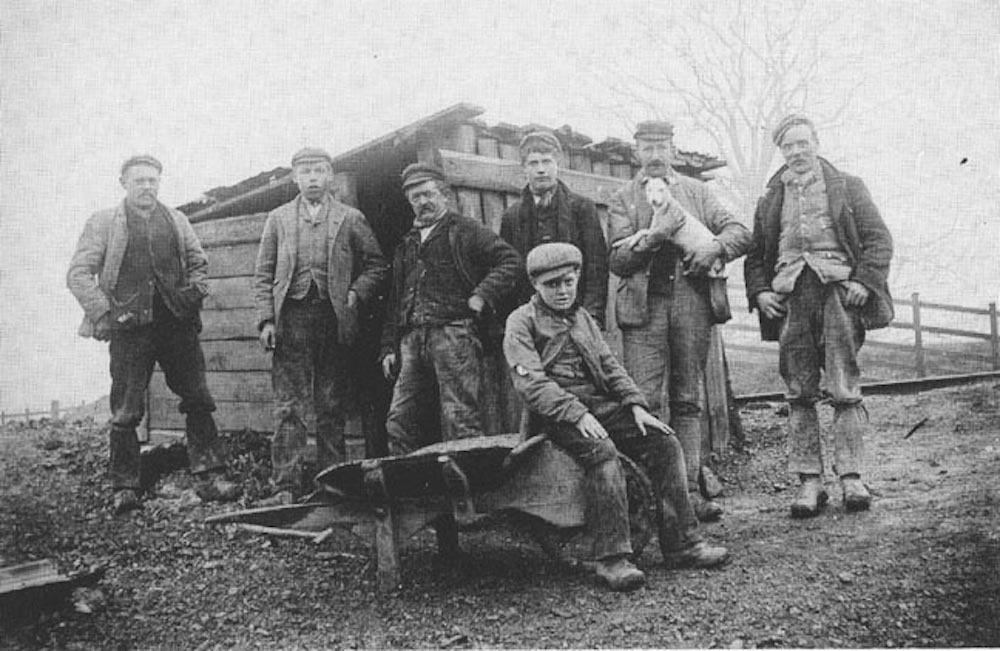
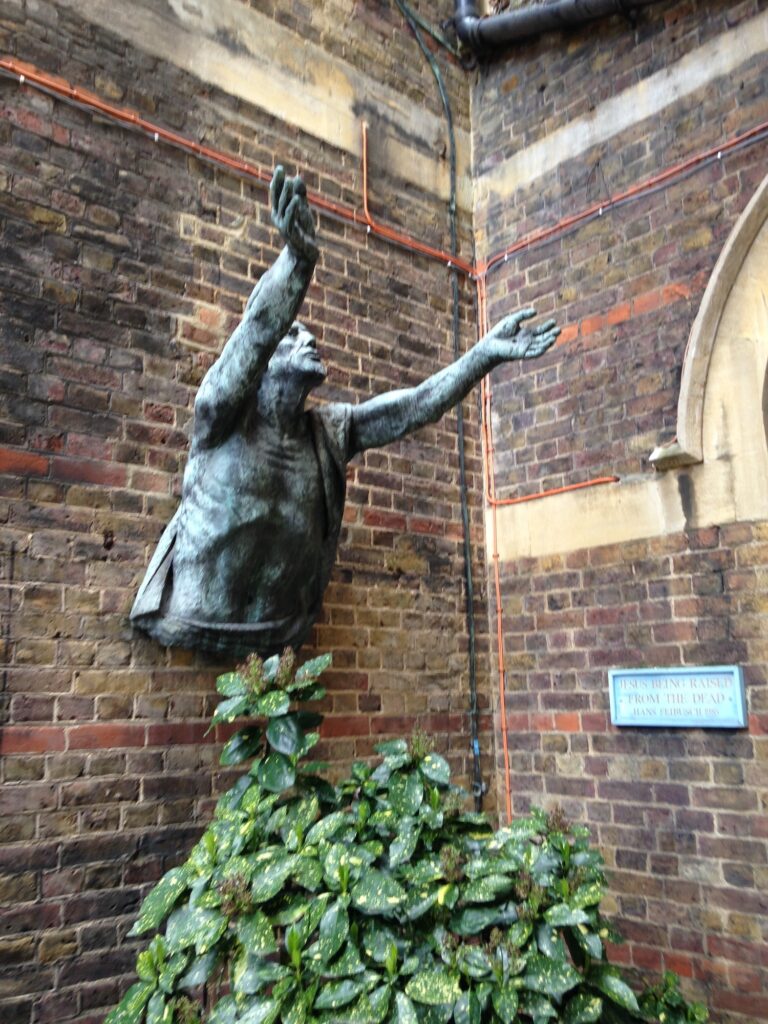
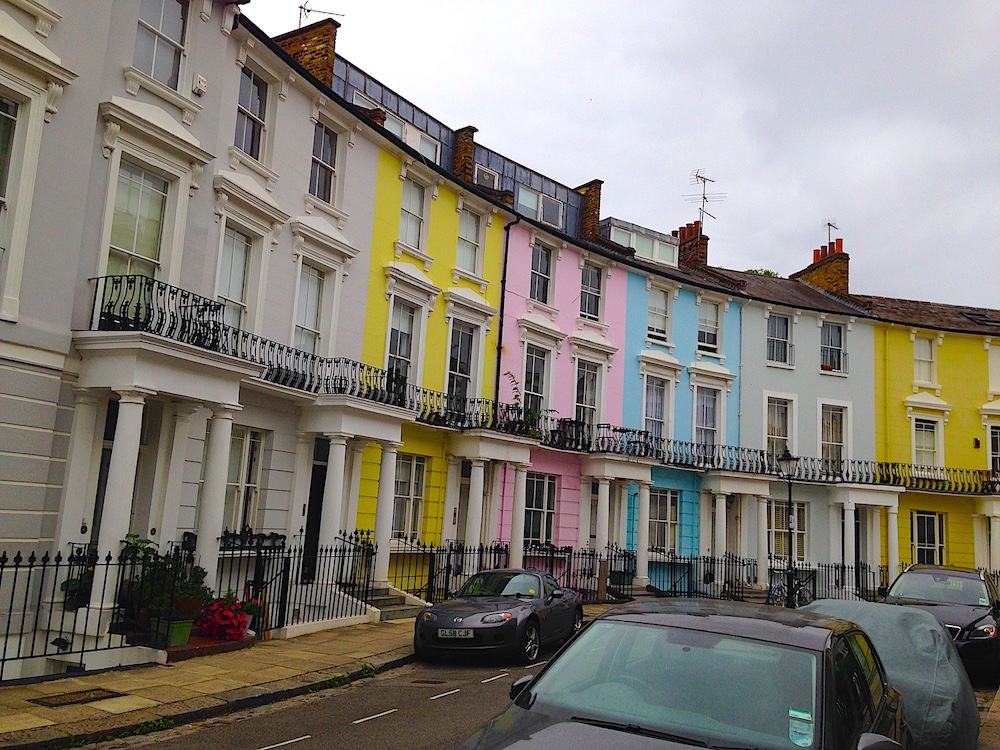
 All our lives society has been represented to us as a hierarchy or pyramid in which the rich are located at the top, the middle class sits underneath and workers sprawl at the bottom. Anything lower than the bottom is called underclass, a lot of dysfunctional nobodies. Isn’t it still assumed everyone is striving to move up this ladder? Failure is constructed as happening downwards, a falling into an abyss – the word Jack London and Mary Higgs used to describe how the poor were forced to live.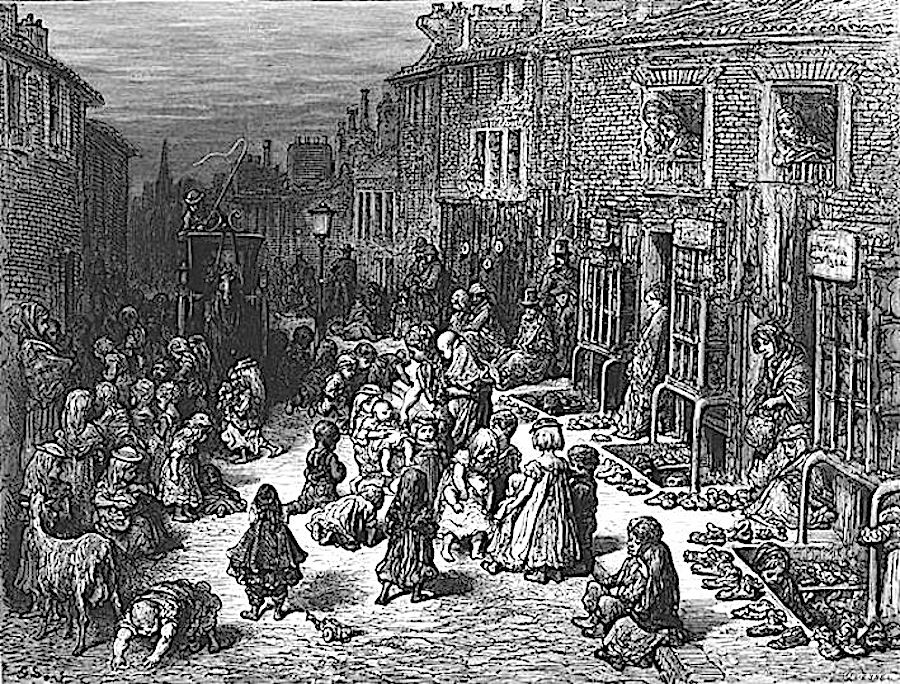
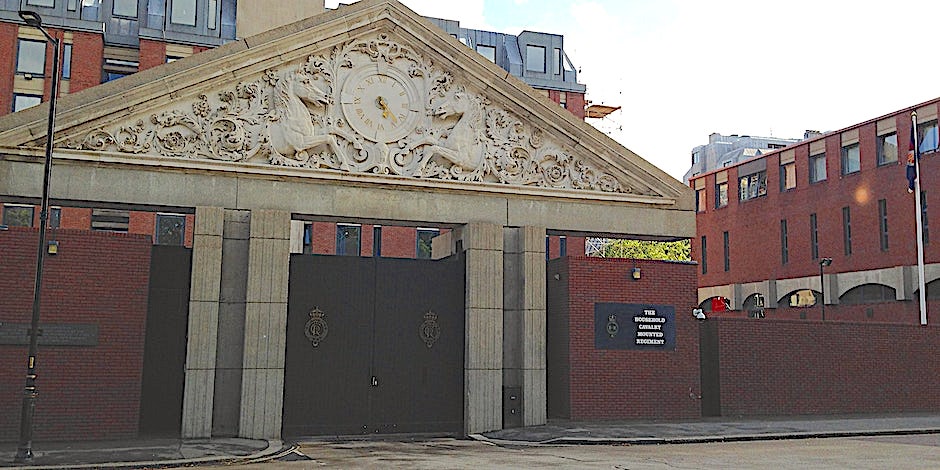
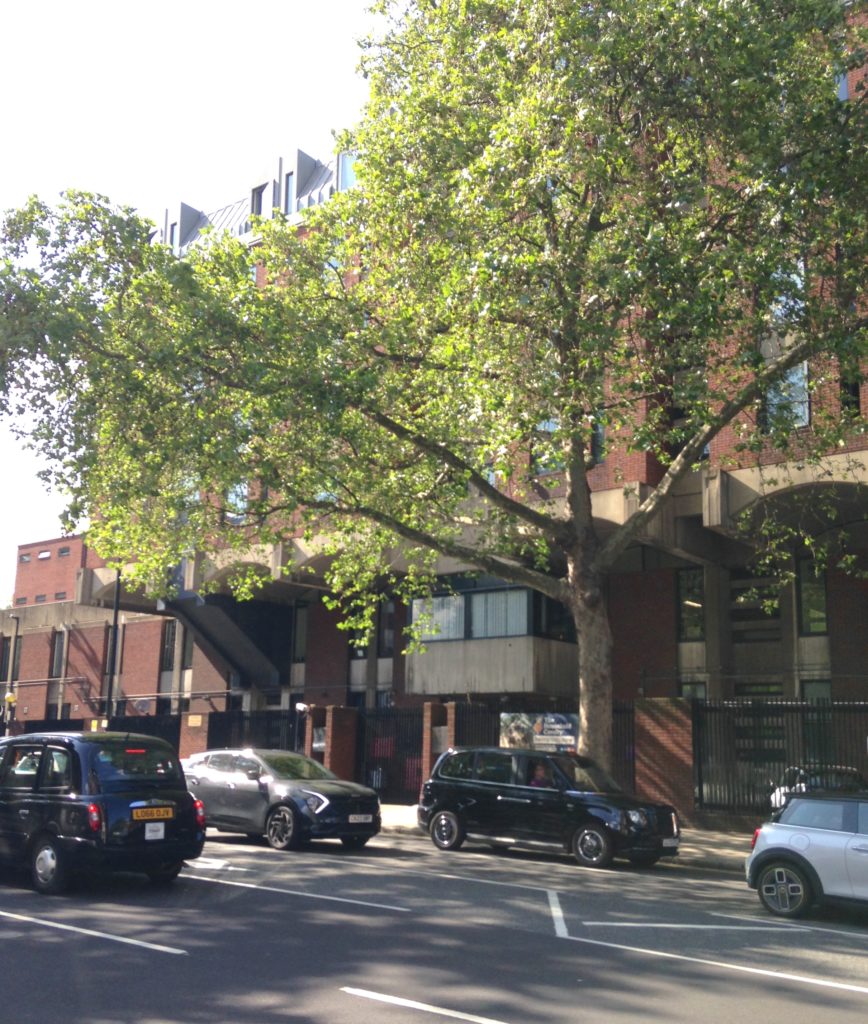 The back of the buildings face onto where for several hundred years poorly-paid soldiers, their girlfriends, wives, children and hangers-on scraped together livings. Knightsbridge (the street) was scene of goings-on that wealthy folks called disorderly, meaning drunkenness, carousing, noise, fights, streetwalking, numerous pubs and two major music halls whose raucous style of entertainment suited the working class. Sites of Low Pleasures, according to those set on raising the tone of the area.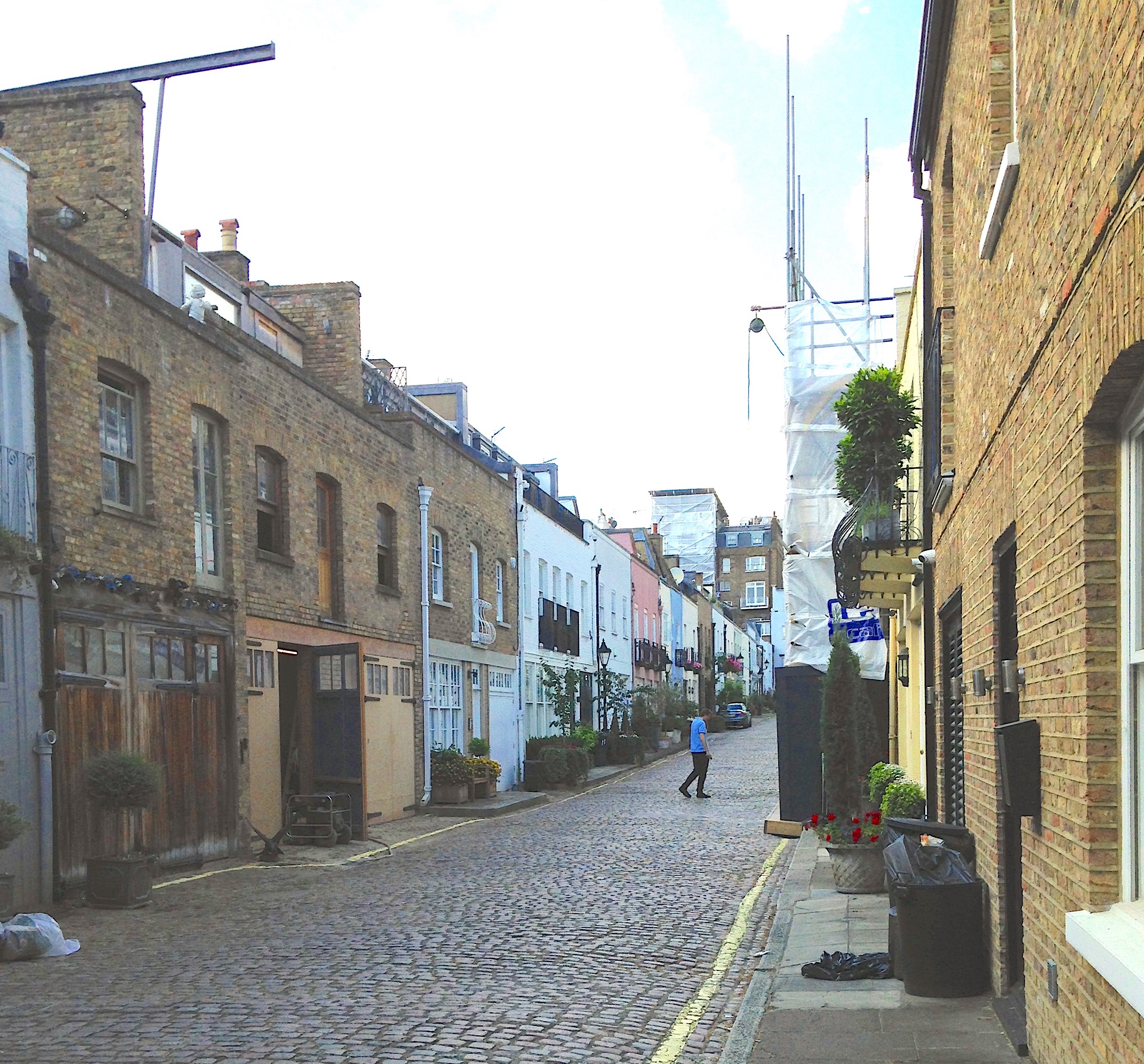
 The best thing about this award is the fact that someone like myself can qualify at all. The Women’s History Network, recognising those doing rigorous research without being employed academics, have a separate grant category for us. I shared this prize with
 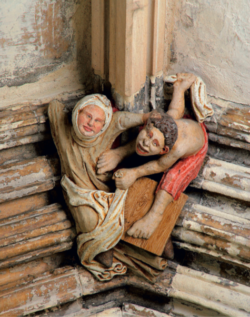 So sometime this winter when prices are lower and the weather absolute crap, I’ll go to Norwich for some days and visit the cathedral to see in person this sculpture of a medieval laundress in the act of being robbed by a barefoot boy. She’s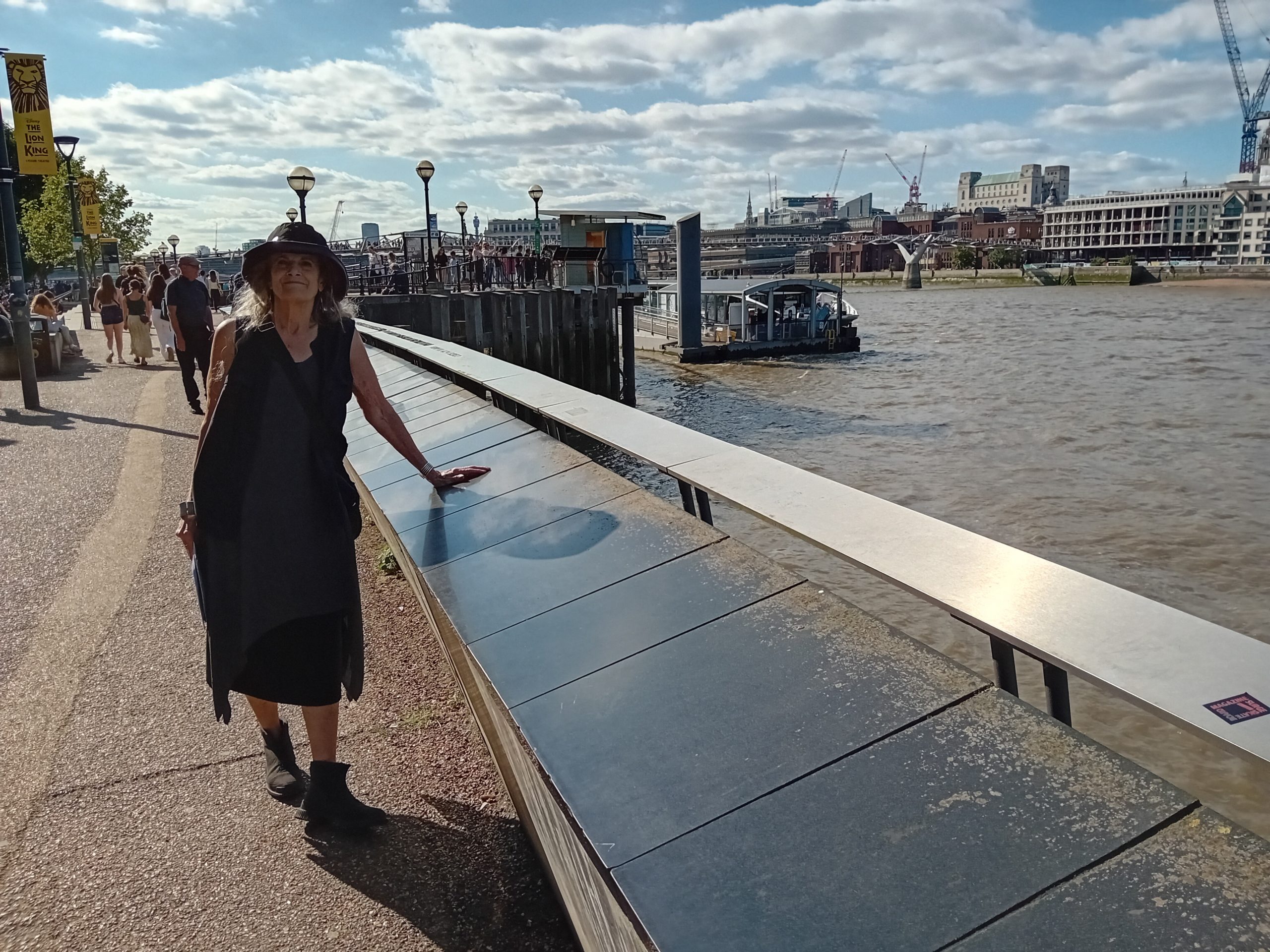
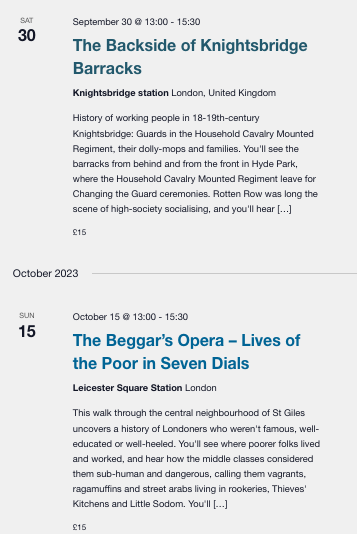 You can see what walks I have coming up via the tab on the top menu called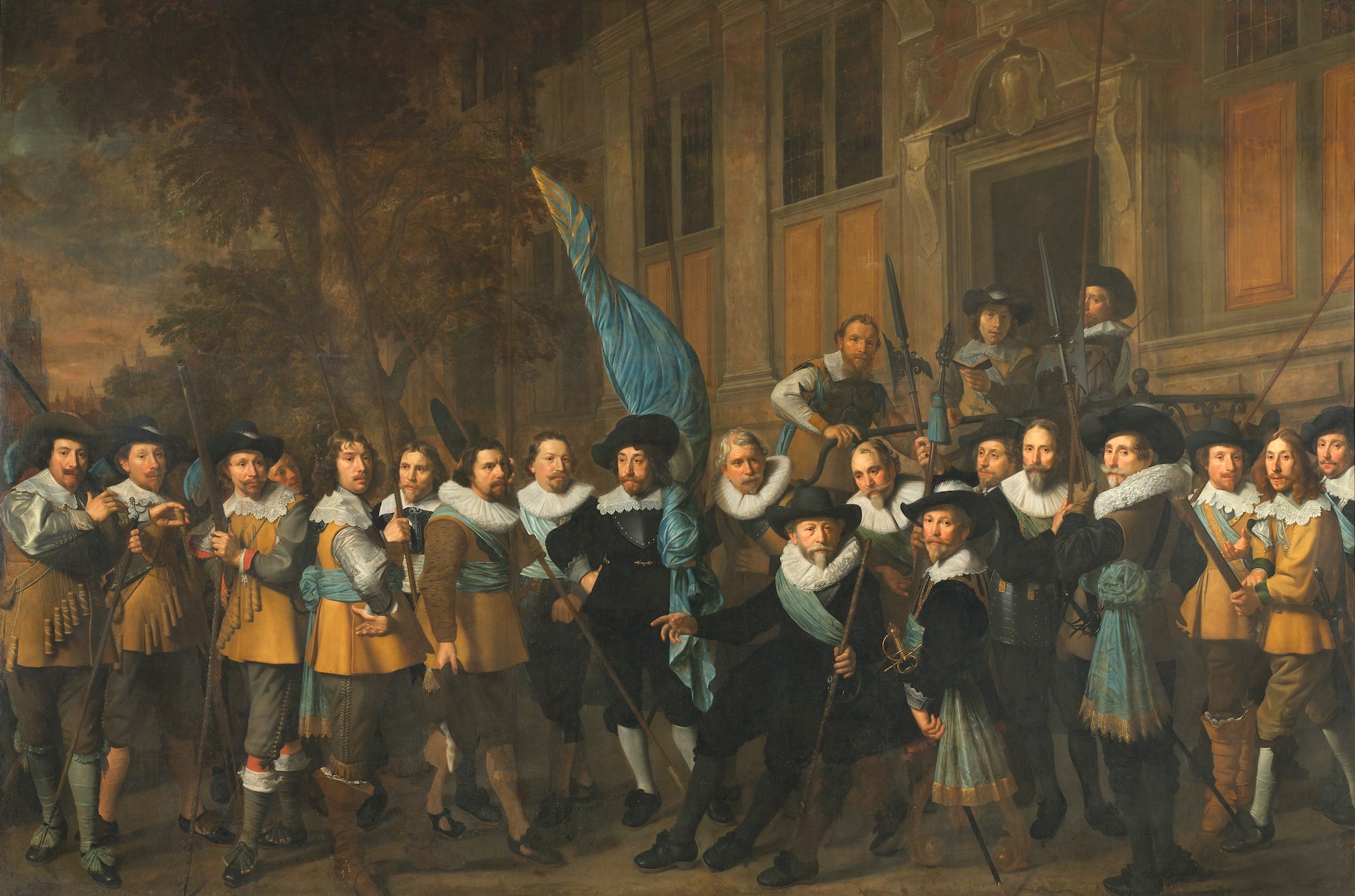
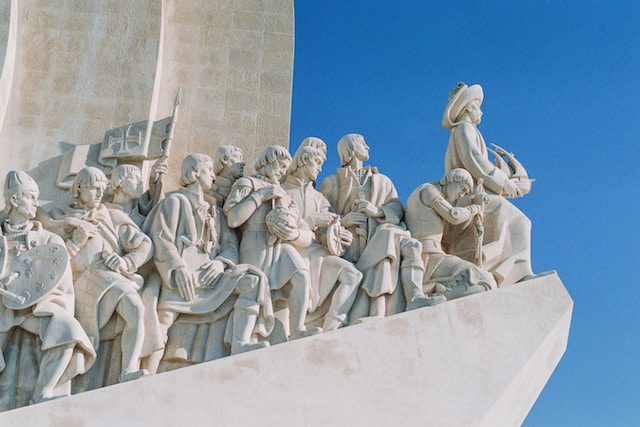 When considering telling a history, whose point of view do you take? In most histories the author presumes to have an objective meta-overview of events and to know what’s important and what’s trivial. In these accounts women are usually subordinates or walk-on characters and the poor and working-class hardly appear unless they are the objects of bourgeois charity. When Antonio Gramsci referred to the subaltern and Southeast Asian scholars built a field of studies on it, they put at the centre people rarely given their due in histories.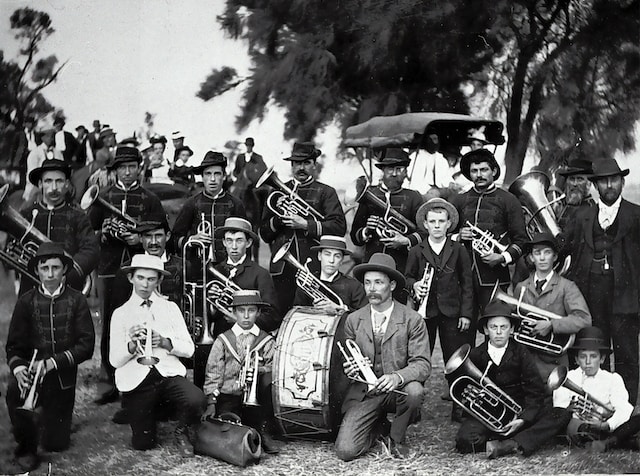

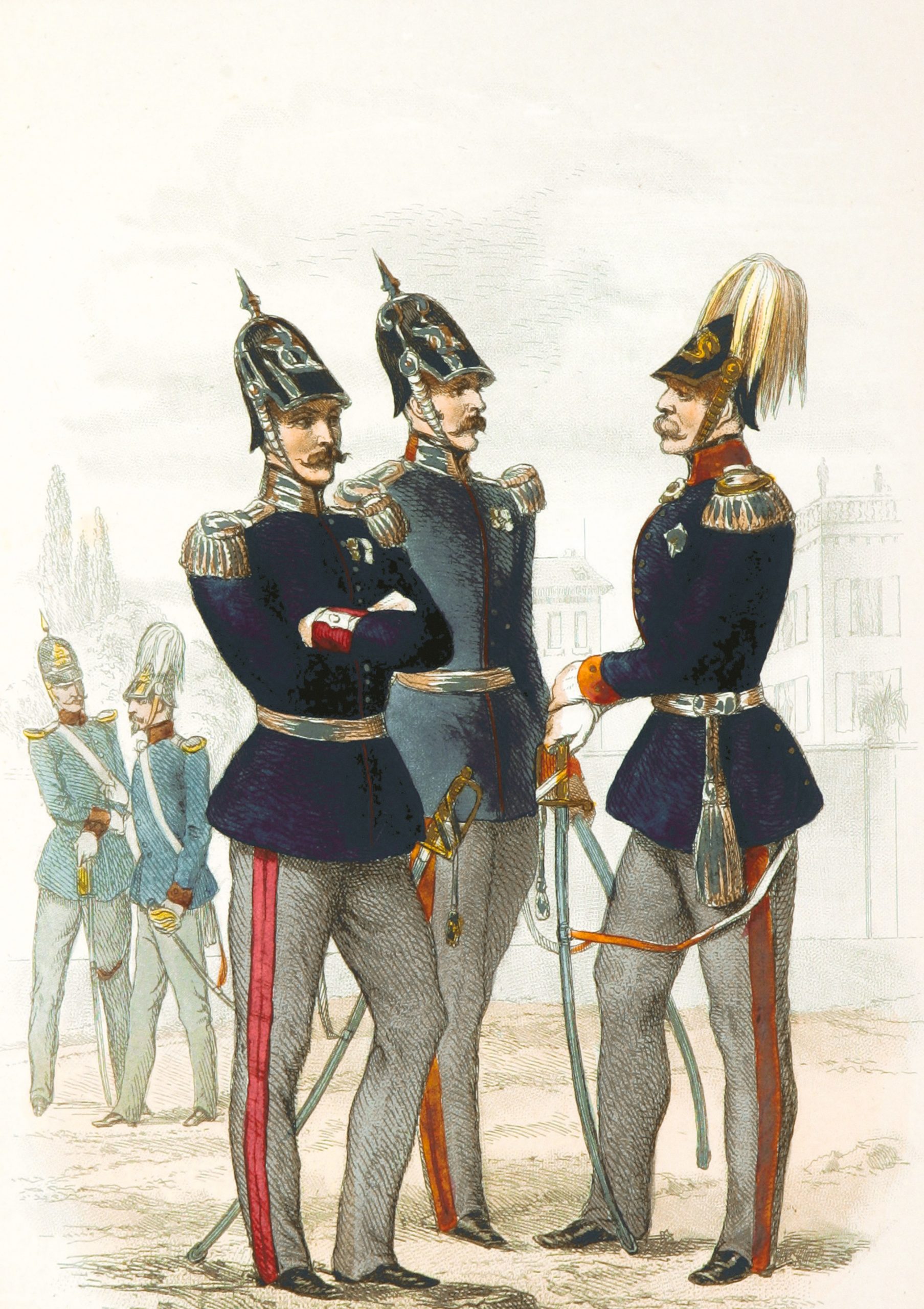

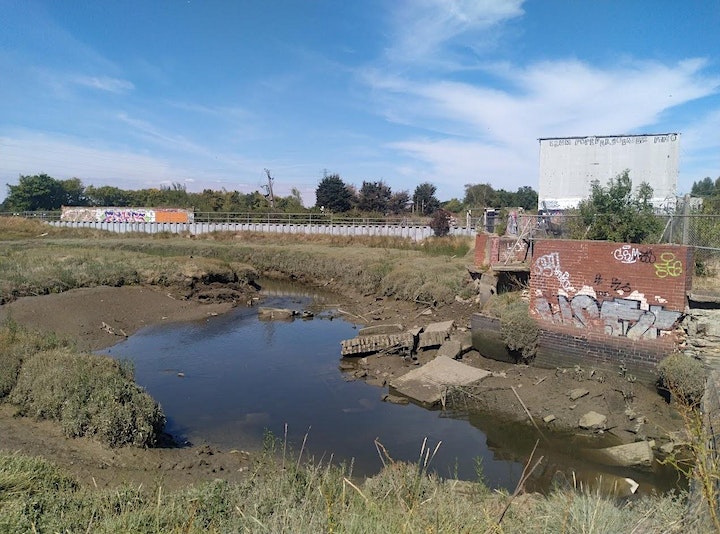
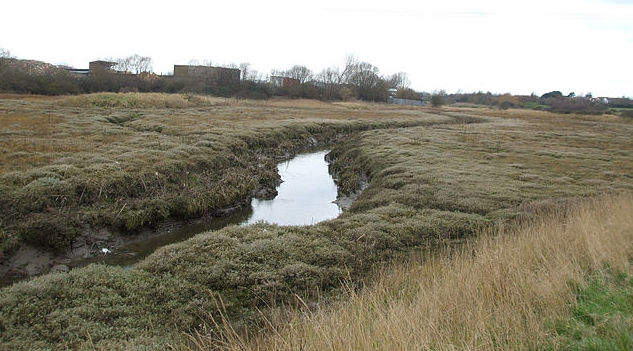
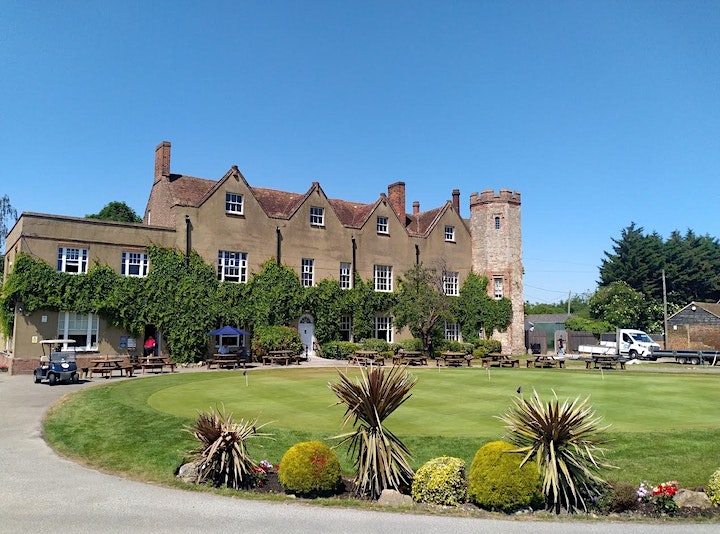
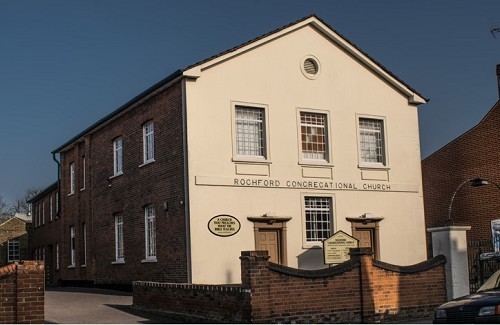
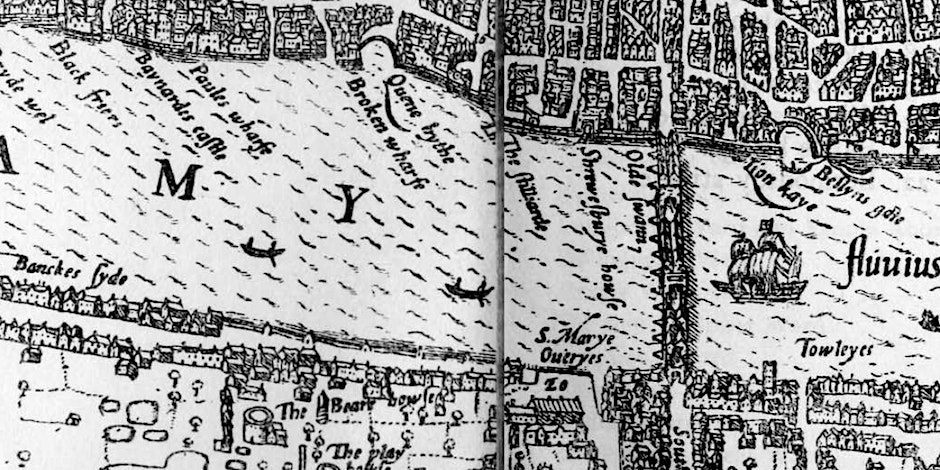
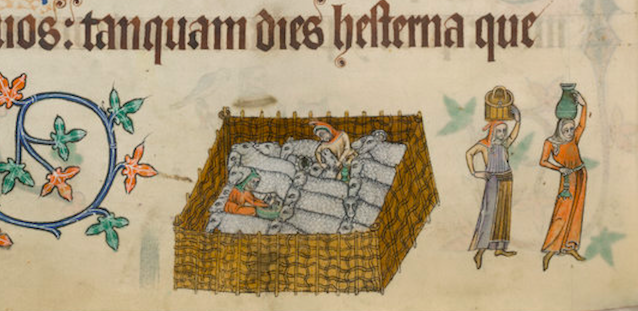
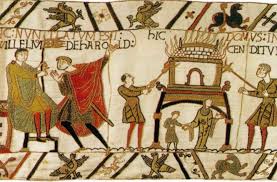
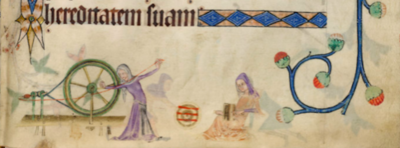
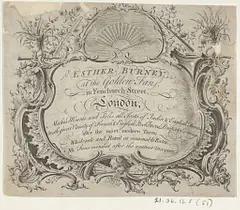
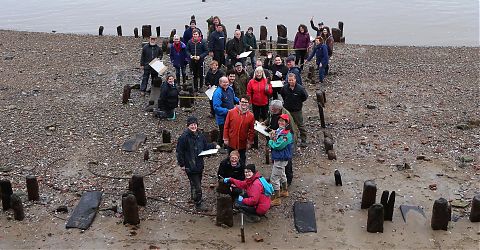
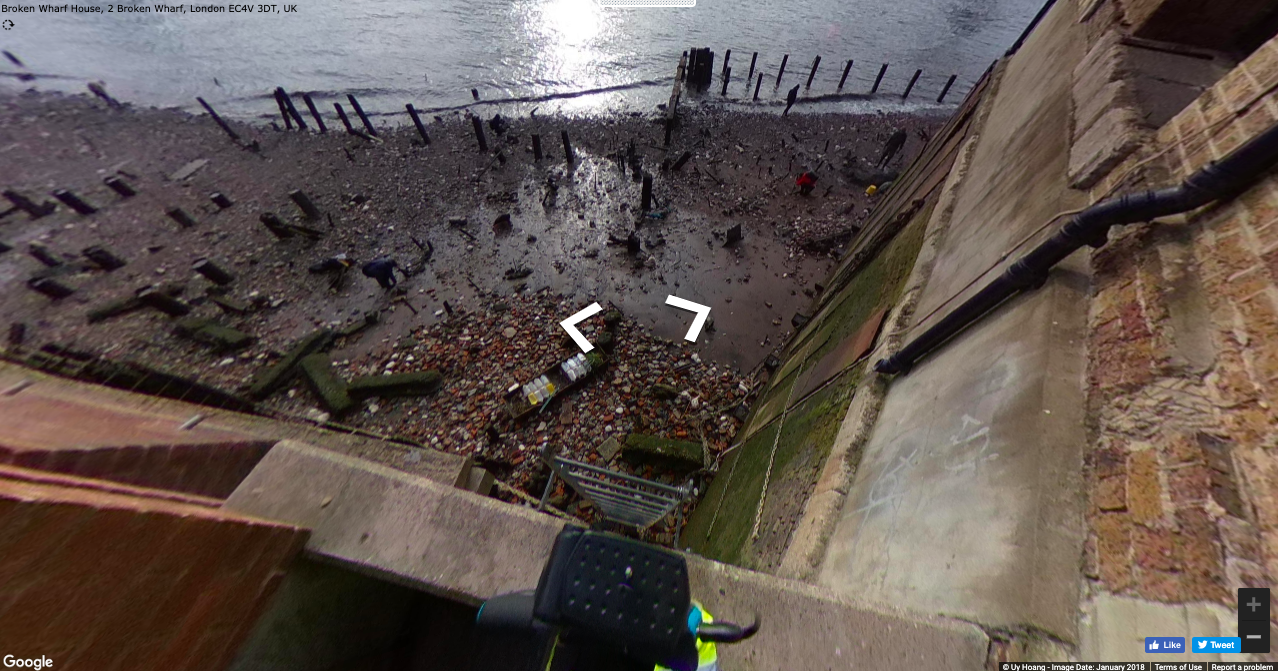
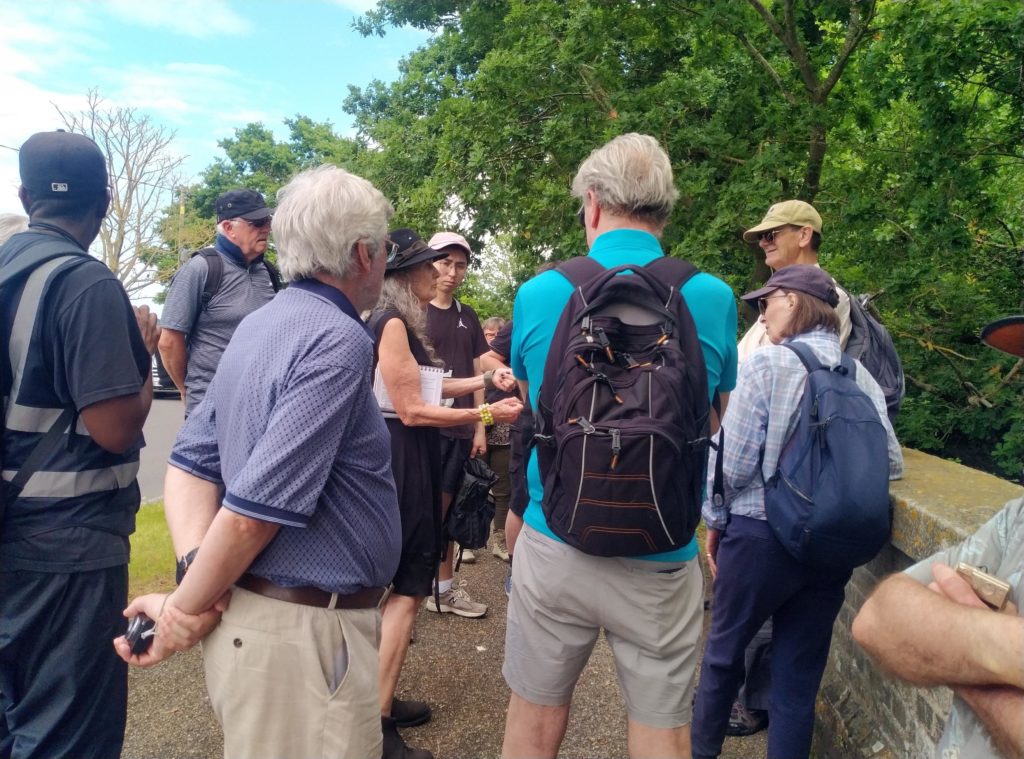 PUBLIC NOTICE: I’ve become a qualified tour guide. Not because I want to take tourists to see the changing of the guard or other typical tourist delights but because I’ve been an inveterate walker all my life and I like talking about pieces of the past other folks might not know about – while walking. You can see me doing it in this photo from my first paid walk, and you can read more about it on the page called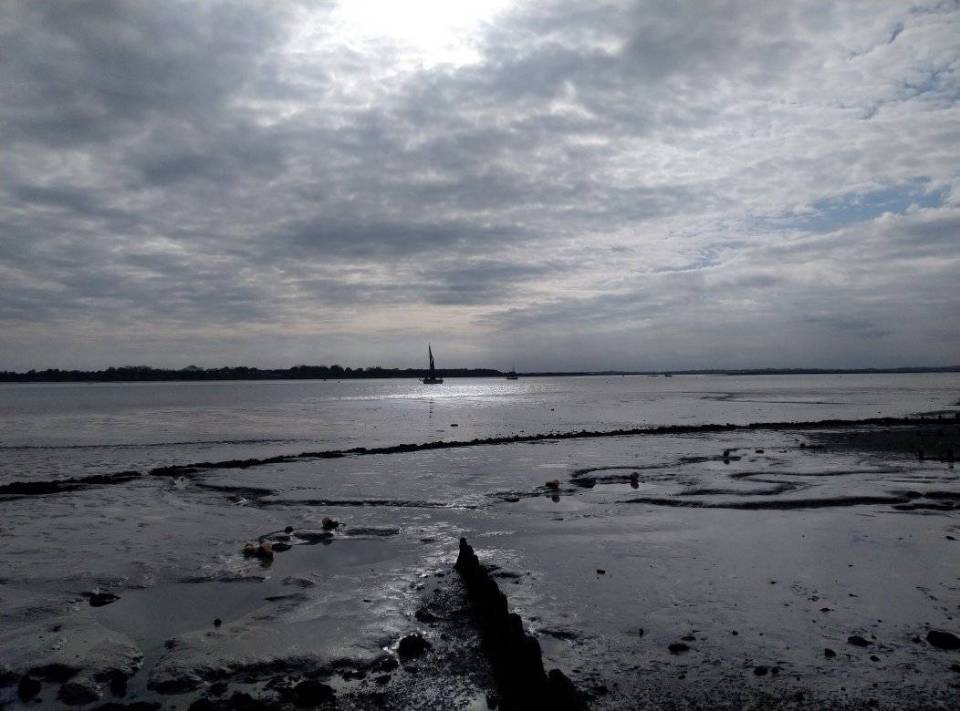

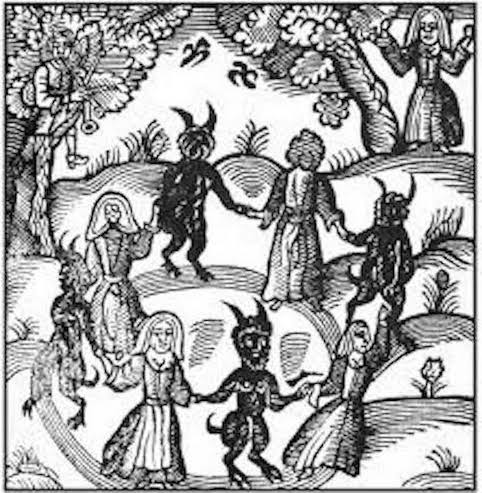
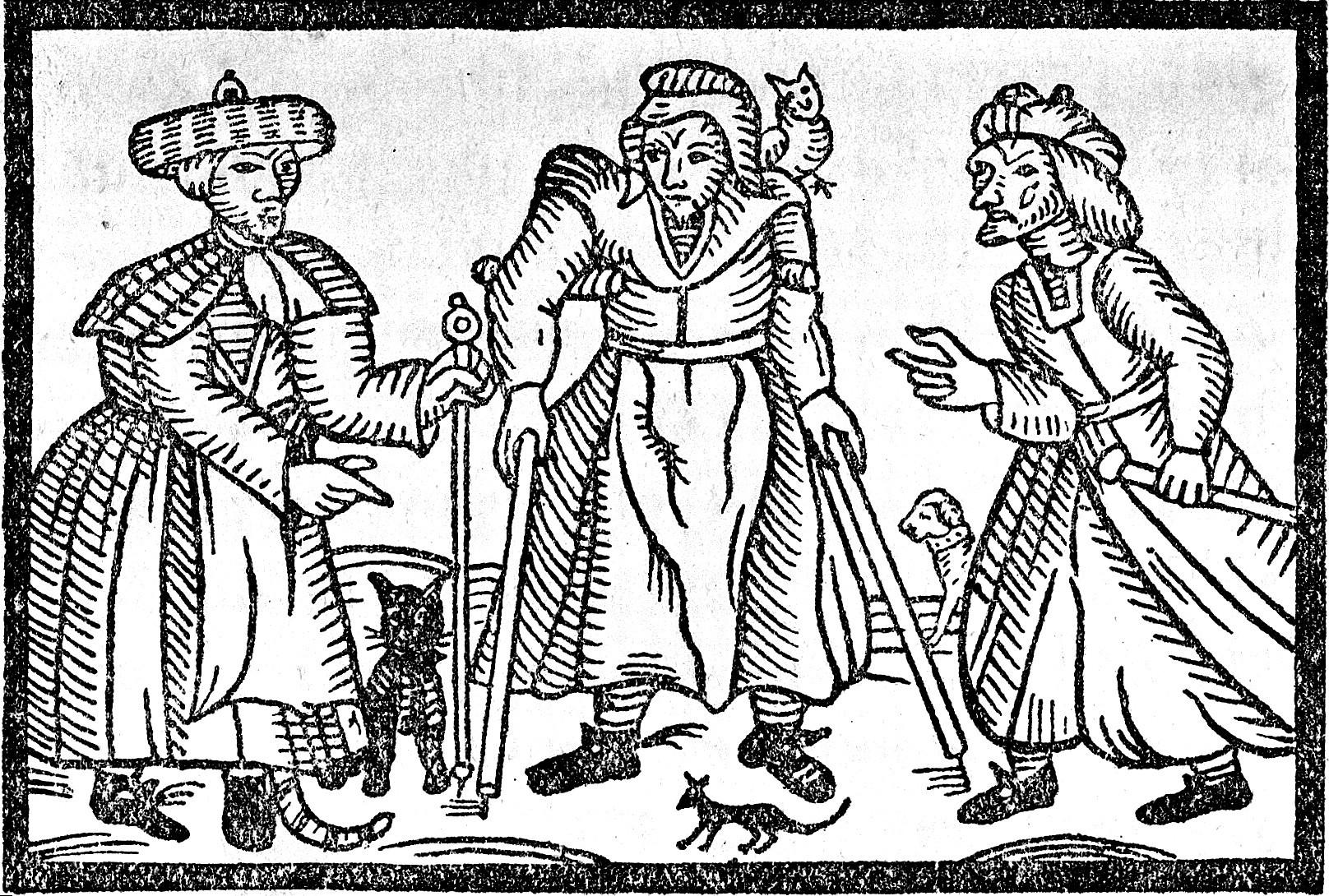

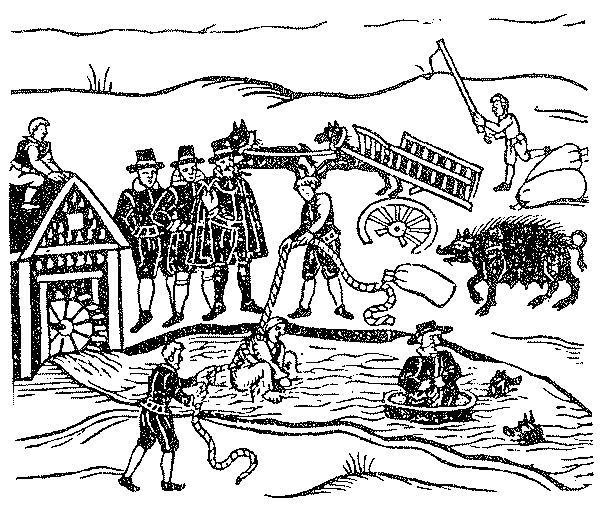
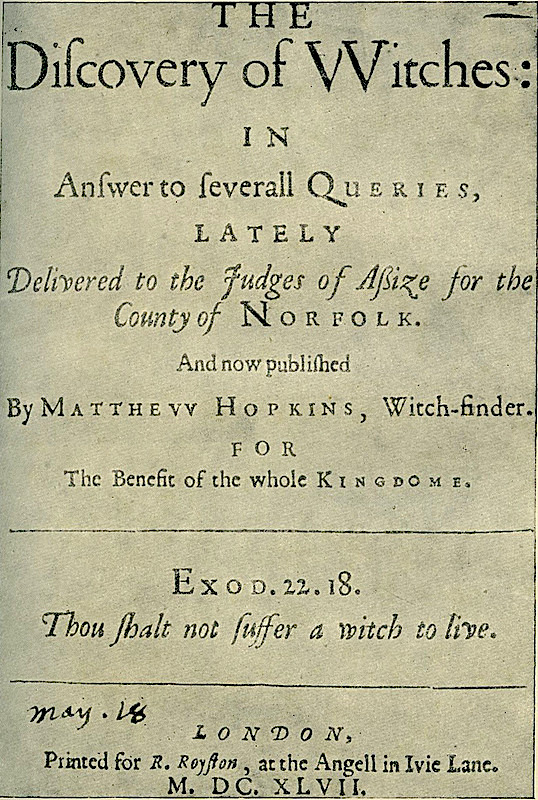

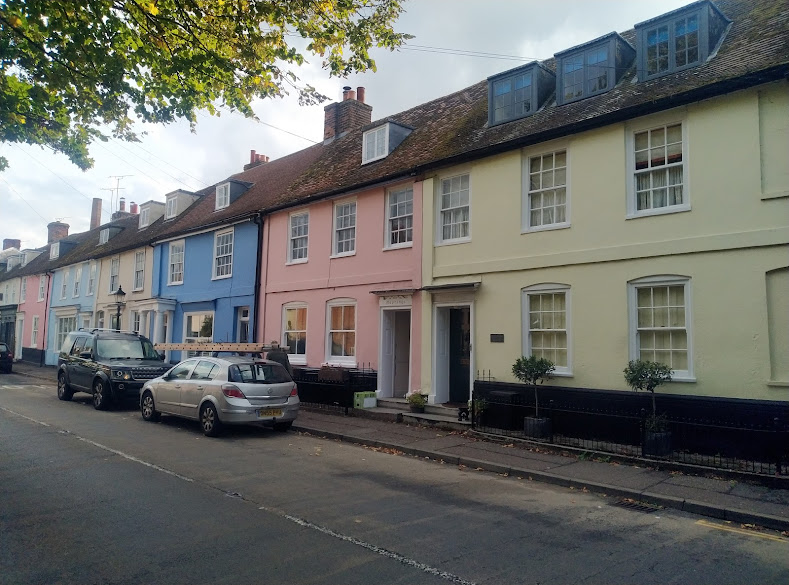
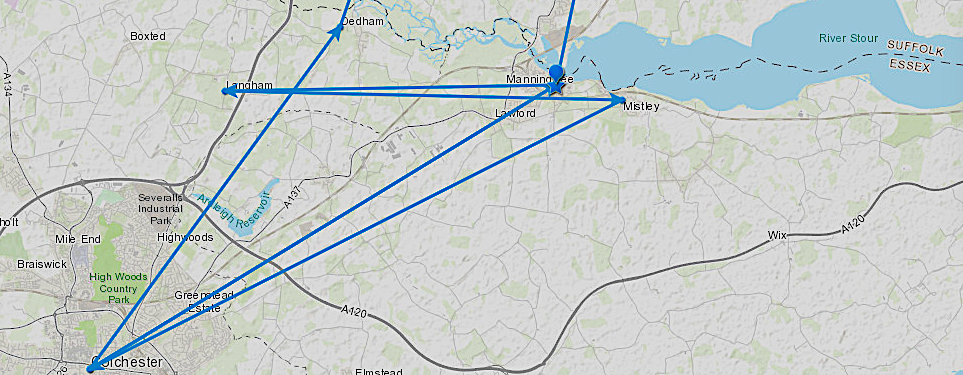
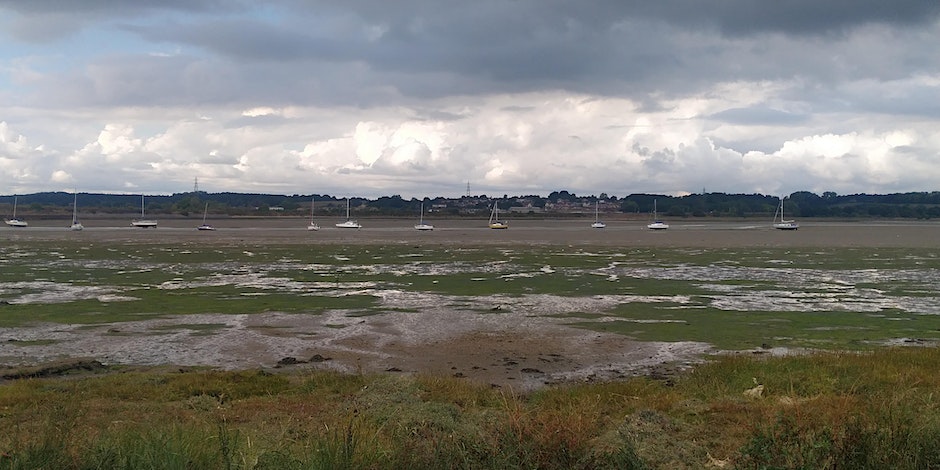
 Le sexe en tant que travail et le travail du sexe
 Christmas in the Brothel
 At a daylong event in Santo Domingo that was organised by black bargirls who called themselves sex workers, I sat in the last row. After a series of testimonies by the women and expositions by local legal experts, a speaker appeared who was said to have flown in from Venezuela. Addressing herself to the women in the first row she said ‘You have been deceived. You are not sex workers; you are prostituted women’.
 In 2000, the editor of a migration-oriented journal in Madrid invited me to write about migrants who sold sex, sin polémica (without polemic), because by now outraged ranting was the only tone heard in public. By this point I was observing in a consciously anthropological fashion, so her requirement suited me. The resulting article, Trabajar en la industria del sexo (Working in the sex industry), led to a high official’s infiltrating me into an event held by the Coalition Against Trafficking in Women, to spite an abolitionist rival. Although I had no intention of making my presence known, I did attend, and for one long day listened to the ravings of some of the world’s most well-known anti-prostitutionists.
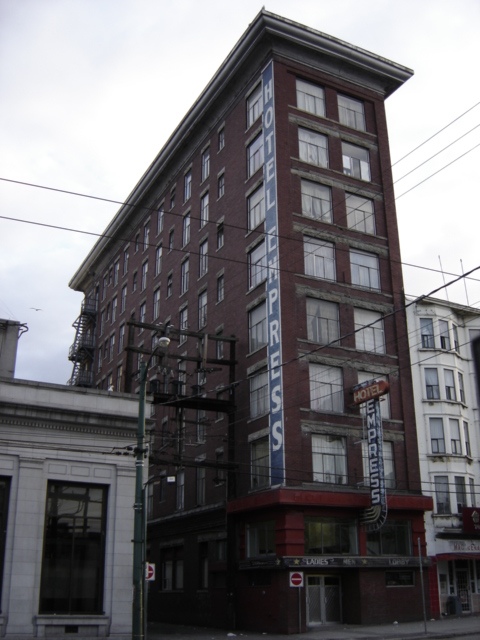 We hear most about the big moments in sex workers’ rights movements – court decisions, parliamentary reports, conferences, public protests. But many groups engage in negotiations behind the scenes, with business managers, local politicians and sometimes with their local police.
 In Vancouver it started with cooperative development:
  From there we did some strategic planning:
 So the Sex Industry Worker Safety Action Group was created and included sex workers groups and the VPD working together to try to address issues of policing. that work resulted in the VPD lowest-level-of-enforcement policy:
 This report contained many of the recommendations submitted by the BCCEC based on work we had done under the leadership of Raven Bowen – a visionary – and included policing recommendations as well as City of Vancouver inspections and housing and other responses
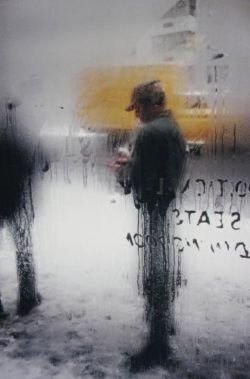




 Since last spring I’ve been providing Naked Anthropologist News to
  In Nigeria
 About the photos: ‘
 When so-labeled Expresionist Munch painted the scene there was already a body of Impressionist works depicting prostitutes lounging and sitting with expressionless faces as they wait for clients. Toulouse-Lautrec painted this one of many in 1894.
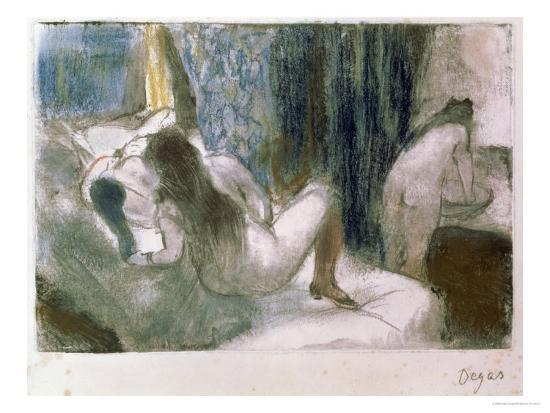 The women are sometimes naked, but the tone is unexcited, the poses often awkward. Degas made this painting in 1879, the low-key colour-scheme contributing to an absence of titillation.
 Recently the short form decrim has appeared in the name of several groups campaigning for decriminalisation of prostitution: the removal of criminal penalties for selling and buying sex. But there is never one clear law that might be annulled in a fell swoop; it is not so simple. Rather there are everywhere multiple clauses within different laws and sections of penal codes, as well as regulations used to police many sorts of commercial-sex activities. Every jurisdiction, every city and town has its own bag of prohibitions, sometimes initiated locally and sometimes mandated by the state.
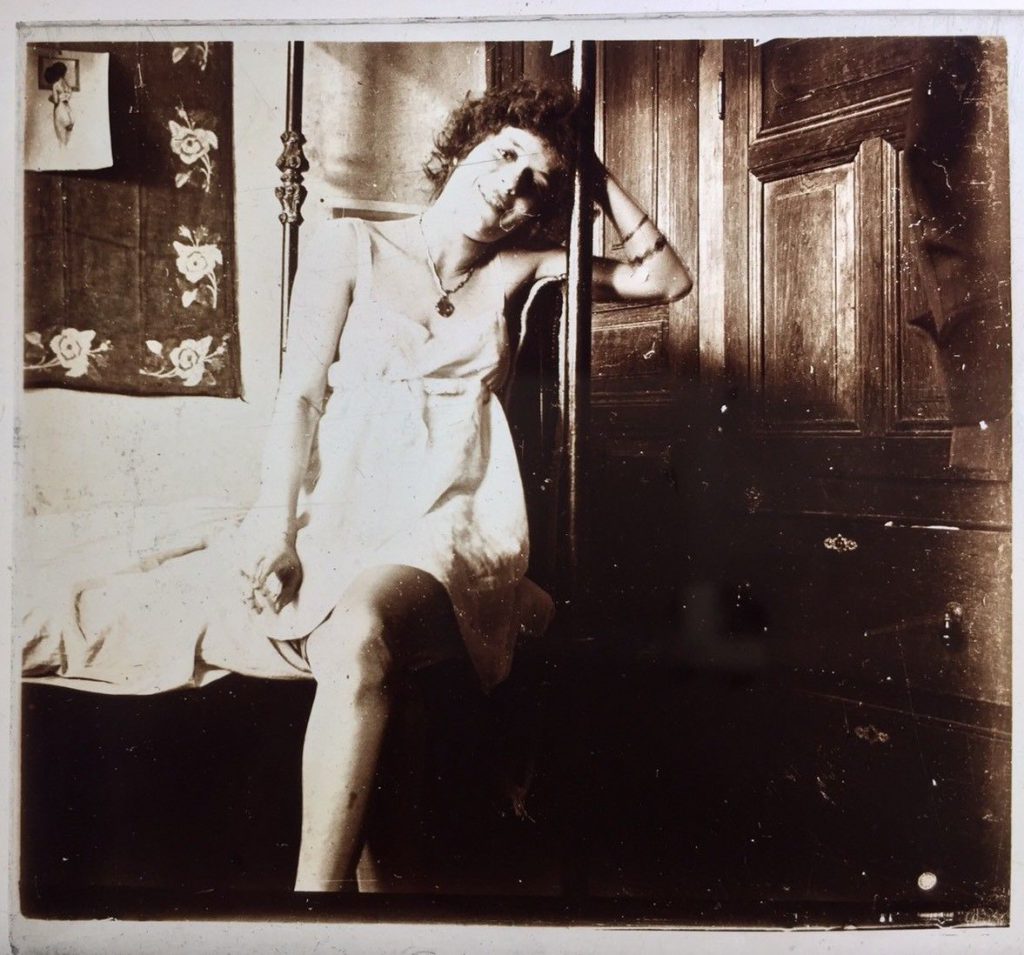 The language remains vague and out-dated because it is convenient to the state, allowing police to charge miscreants for myriad activities under umbrellas of disorderliness, for example, or anti-social behaviour. The terms go in and out of use, but there’s always a handy, all-encompassing phrase to charge with, whether you’re in New York or Bangkok.
 That’s quite a lot of law and code that would need to be amended if any principle of decriminalisation were ever accepted. And even then the tentacles of criminalisation extend to other areas of law and practice. For example, the Crown Prosecution Service has
 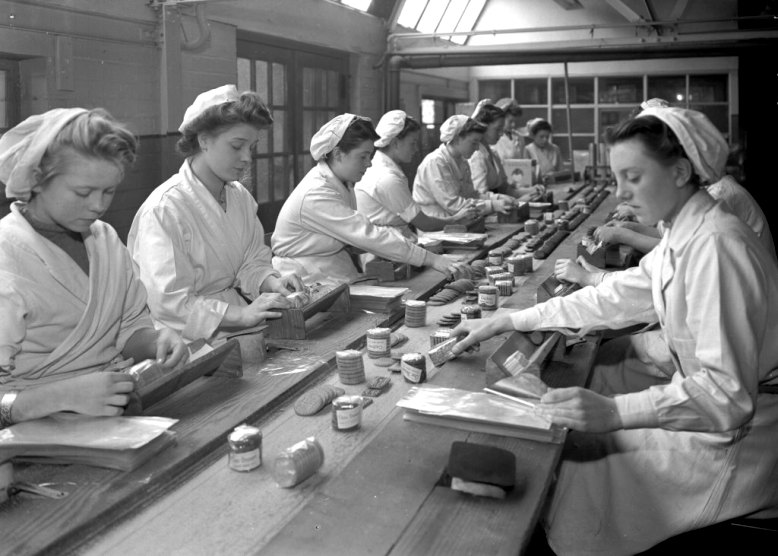 Decrim advocates say they want ordinary labour law to cover the sex industry, but which labour law would be used as the pattern for the different kinds of sex work? Decrim, if attained, would lead immediately to a raft of characters’ stepping forward with proposals for how to regulate (which some will call legalisation). Consider the following: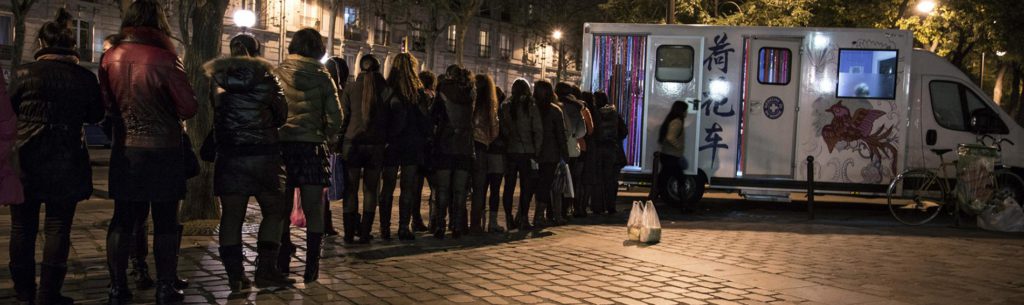
 Caveat about naming New Zealand’s Prostitution Reform Act as the model for desired decriminalisation. The PRA specifically excludes migrant workers from selling sex, and while you may think that’s a detail, consider that in some jurisdictions the majority of women selling sex are not natives of the place but incomers (visitors, students, tourists, migrants). They have travelled from somewhere else, because they wanted to or felt obliged to, and they judge selling sex to be the best of their limited money-producing options. In New Zealand, they are deported. Decrim itself has no effect on migrants without permission to live and work; they remain in underground economies.